

Pixie braids are having a real moment right now, and it is easy to see why. This short and braided take on the pixie bob gives you the bold and cropped energy of a pixie cut. At the same time, it is built entirely from protective braids. You get a fresh, edgy silhouette without cutting a single strand of your own hair.
View this post on Instagram
This style works because it solves a real problem. A lot of women want the confidence of short hair without committing to actual scissors. Pixie braids let you test that look. It protects your natural hair while it grows. And switch things up whenever you want a new color, part, or curl finish.
This guide is for real women who want to know if pixie braids fit their lifestyle. You will find dozens of style ideas, honest cost and time estimates, and simple maintenance tips. These are details your stylist may not always explain. Maybe you are growing out a big chop or taking a break from a longer protective style. Maybe you simply want a fresh look. Either way, this guide explains what to expect from pixie braids before you sit in the stylist’s chair.
What Are Pixie Braids?
Pixie braids are a short, braided protective style built to look like a pixie or bob haircut. Instead of cutting your hair, a stylist braids, twists, or cornrows extensions, or your natural hair, into small sections, then trims and shapes them into a cropped, chin-length silhouette.
The look borrows its shape from the pixie bob, also called a bixie, a popular short haircut that blends a close-cropped pixie with the softer lines of a bob. Pixie braids bring that same silhouette into braided and twisted styles, which is why nearly every version in this guide has “bob” somewhere in its name.
View this post on Instagram
Most pixie braids sit between chin length and jaw length, though a few versions run slightly shorter or longer. Stylists typically use small, medium, or micro-sized braids, twists, or cornrows, and most versions rely on braiding hair extensions for fullness, since hair this short cannot always be braided on its own. Common variations include micro twists, cornrows, knotless braids, and feed-in patterns. All of these are built as a protective style to shield your natural hair while it grows underneath.
The style has grown popular because it gives the drama of a haircut without any actual cutting. You can wear a pixie bob for a season, then take it down and return to your natural length underneath.
Who Can Wear Pixie Braids?
Pixie braids can work for a wide range of hair types, lengths, and lifestyles, which is part of their appeal. Because the style relies mostly on added hair, even short natural hair or a fresh big chop can often support it, as long as there is enough length underneath to braid or cornrow against. If you are working with very short natural hair, talk to your stylist about which braid size will hold best.
Both natural and relaxed hair can typically wear pixie braids, though a stylist may adjust tension and braid size based on how your hair responds to pulling. Fine or thin hair often does better with medium or larger braids, since very tiny braids add extra weight and pull sooner. Thicker, denser hair usually has more flexibility with size.
View this post on Instagram
Face shape is personal, but the short, face-framing length of pixie braids often works well for those who want a look that highlights the jaw, cheekbones, or eyes. A deep side part or curved layers can soften angular features, while a straight-back version can add structure to softer, rounder faces.
This style also suits busy schedules and professional settings well, since it needs little daily styling. It can flatter younger and older women alike, though anyone with a sensitive scalp or a history of hair thinning may want to choose a looser, larger-braid version to keep tension low.
Pixie Braids Styles You Must Try
Pixie braids come in more variations than most people expect. Braid size, texture, color, parting, and finishing technique can all change the entire feel of the cut. Below are 32 pixie braid styles worth considering, along with what makes each one distinct and who it might suit. Cost and time estimates are general U.S. salon ranges. Your stylist’s exact quote will depend on your hair length, density, the braid size you choose, and your location.
Micro Twist Pixie Bob
Micro twists swap the braided plait for a tight, two-strand twist, which gives this pixie bob a slightly smoother, rope-like texture instead of a flat braid pattern. Because each twist is thin, the finished style has a soft, full look that still moves easily.
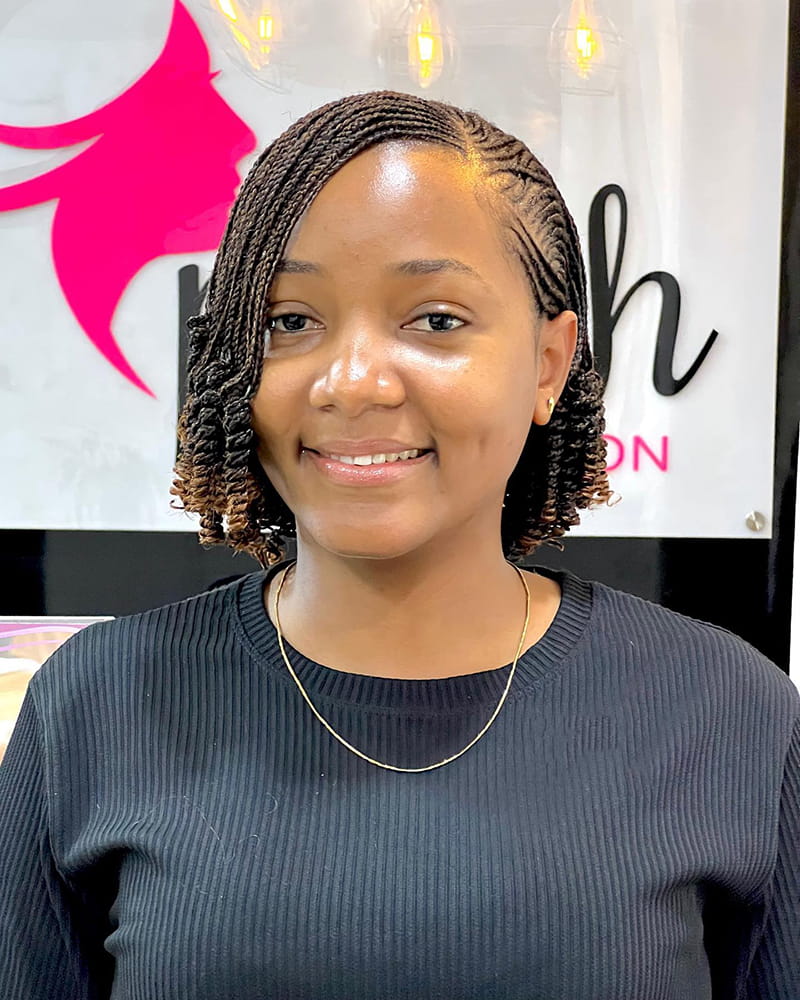
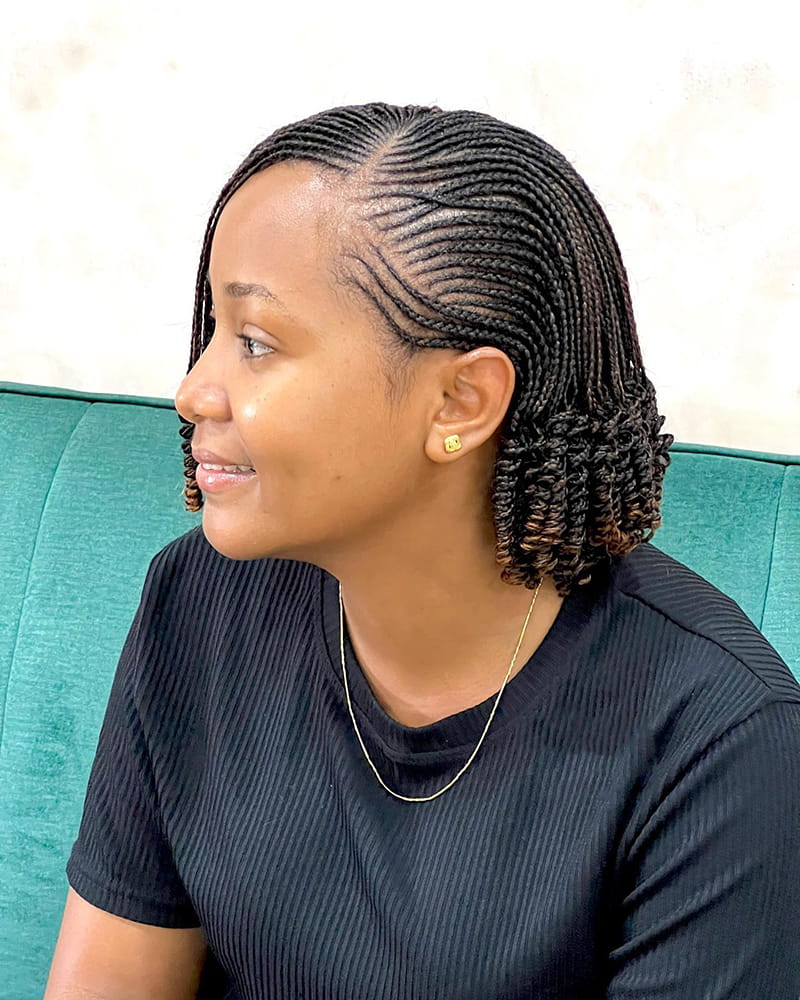
This size takes patience. A full head of micro twists can take around 4 to 6 hours in the chair, and pricing for this fine size often runs from $250 to $450 depending on your hair length and the salon’s location. The tiny sections also mean less bulk at the root, which some wearers find gentler on the scalp than thicker braids, though any style can feel tight if it is installed too close to the hairline.
Cornrow Pixie Bob
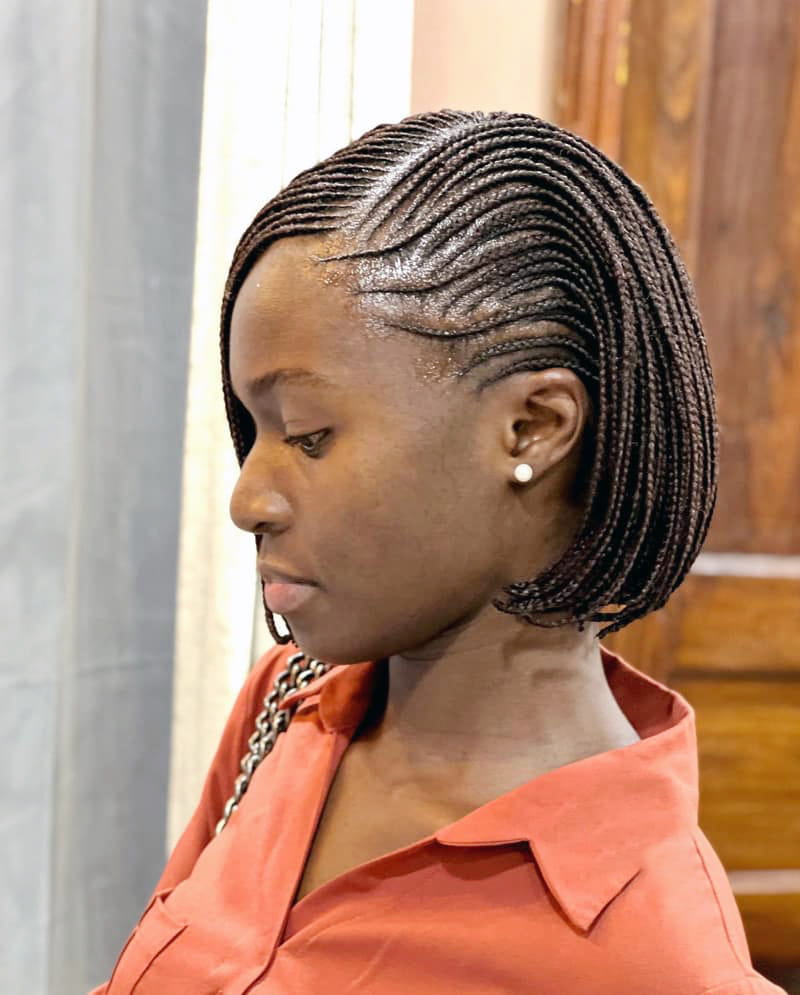
This version skips individual braids altogether and cornrows the entire head into a short, bob-shaped silhouette. Every row lies flat against the scalp, so there are no loose braid tails to manage, just clean, structured lines from front to back.
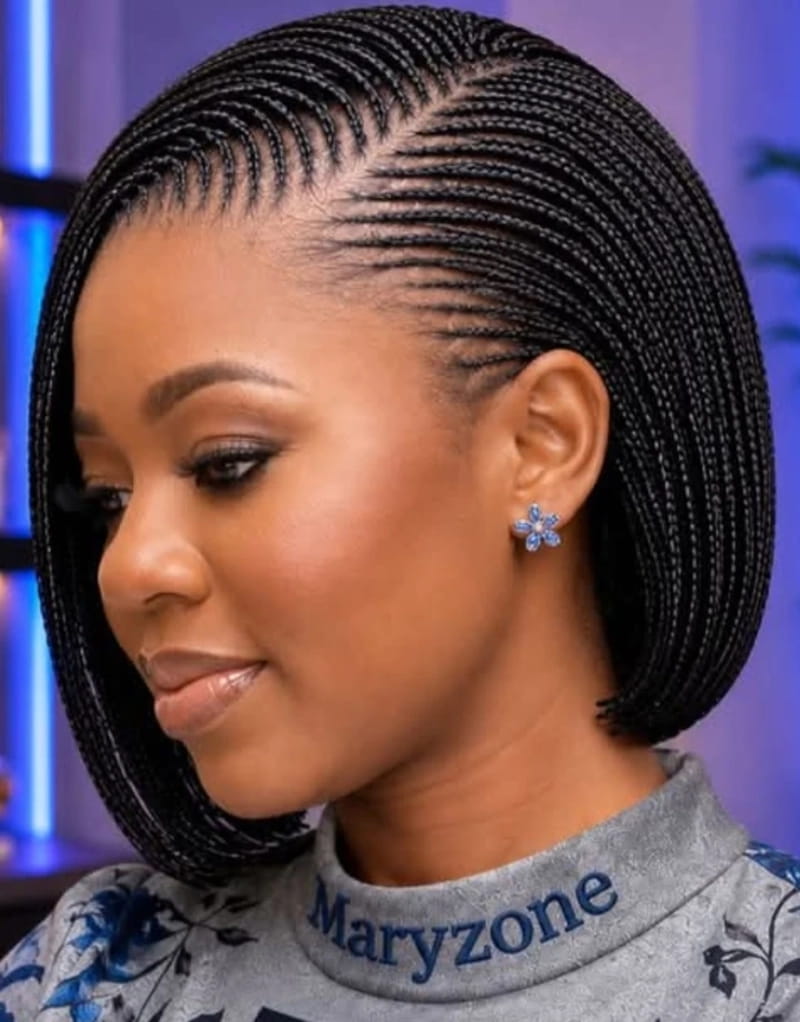
Cornrow pixie bobs tend to install faster than twisted or individually braided versions, since cornrowing covers more hair per row. Expect somewhere around 2 to 4 hours, with pricing often falling between $120 and $250. This makes it a solid choice if you work out often or want something wash-and-go simple, since there is little loose hair to catch sweat or tangle during exercise. For more ideas in this family, this cornrow styles guide has plenty of pattern inspiration.
Asymmetrical Pixie Braided Bob
An asymmetrical pixie braid bob keeps one side noticeably longer than the other, often paired with a deep side part that pushes more length toward one eye. The uneven line adds movement and a modern edge that a straight, one-length bob does not have.
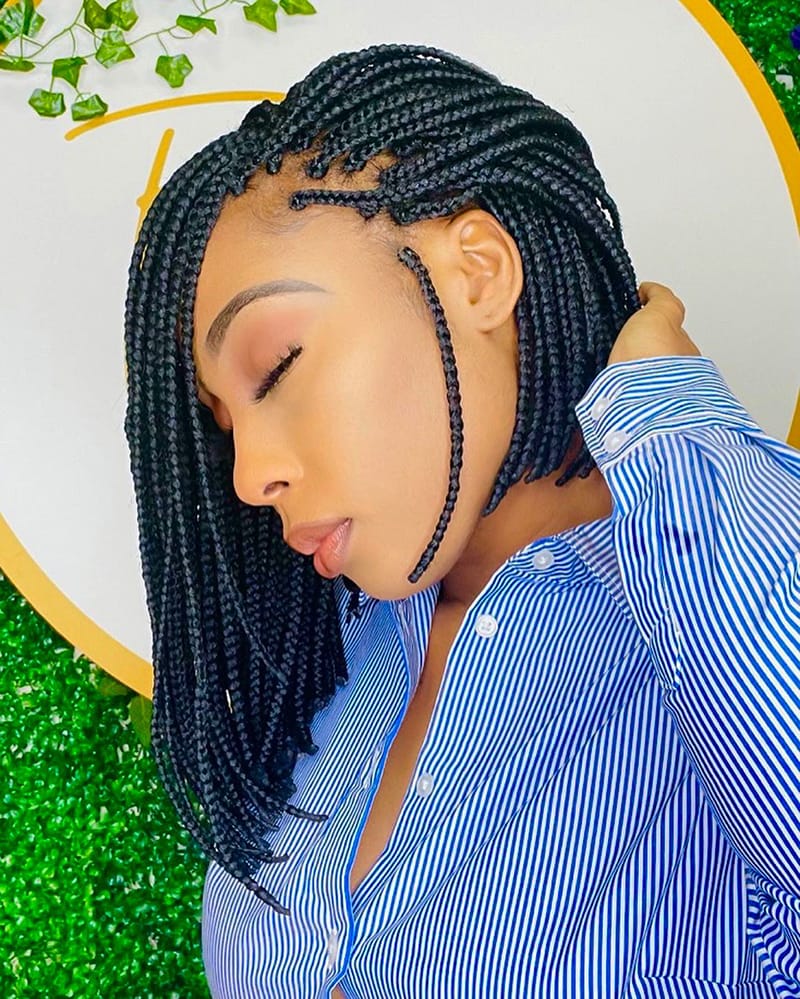
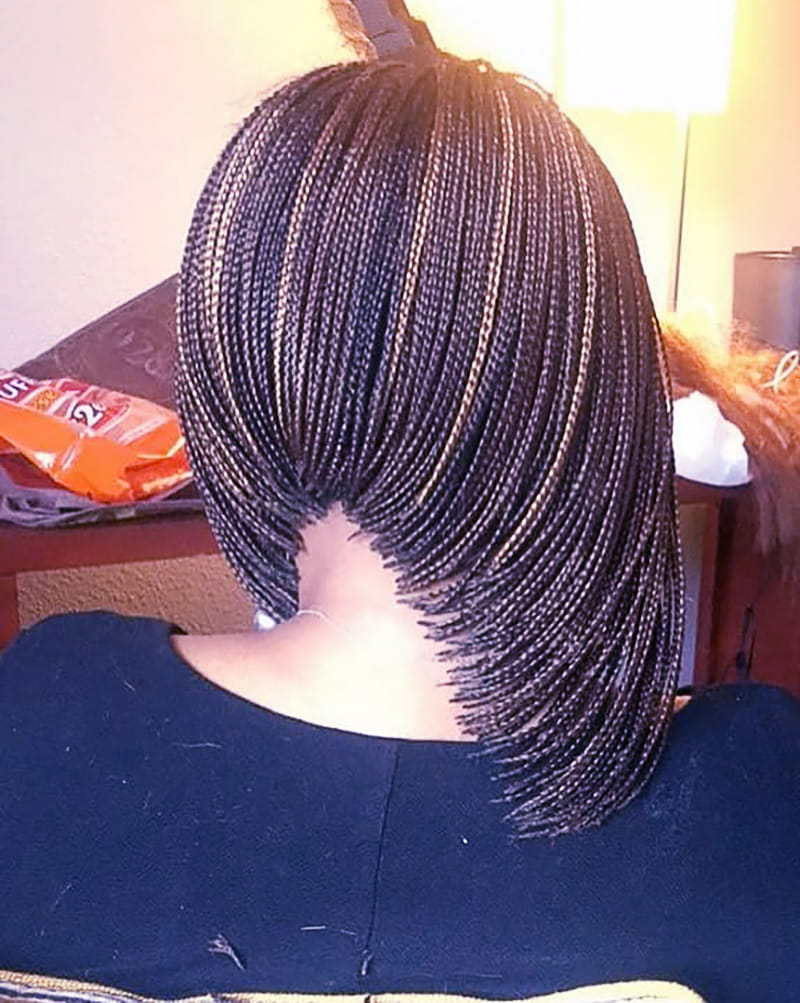
This cut can flatter square or round faces especially well, since the diagonal line breaks up strong jaw or cheek width. Installation runs close to a classic bob, roughly 3 to 5 hours, with pricing near $180 to $320. Because the shorter side sits higher, some wearers find it needs a touch more care to keep that side neat between wash days.
Curly Pixie Braids with Cornrowed Sides
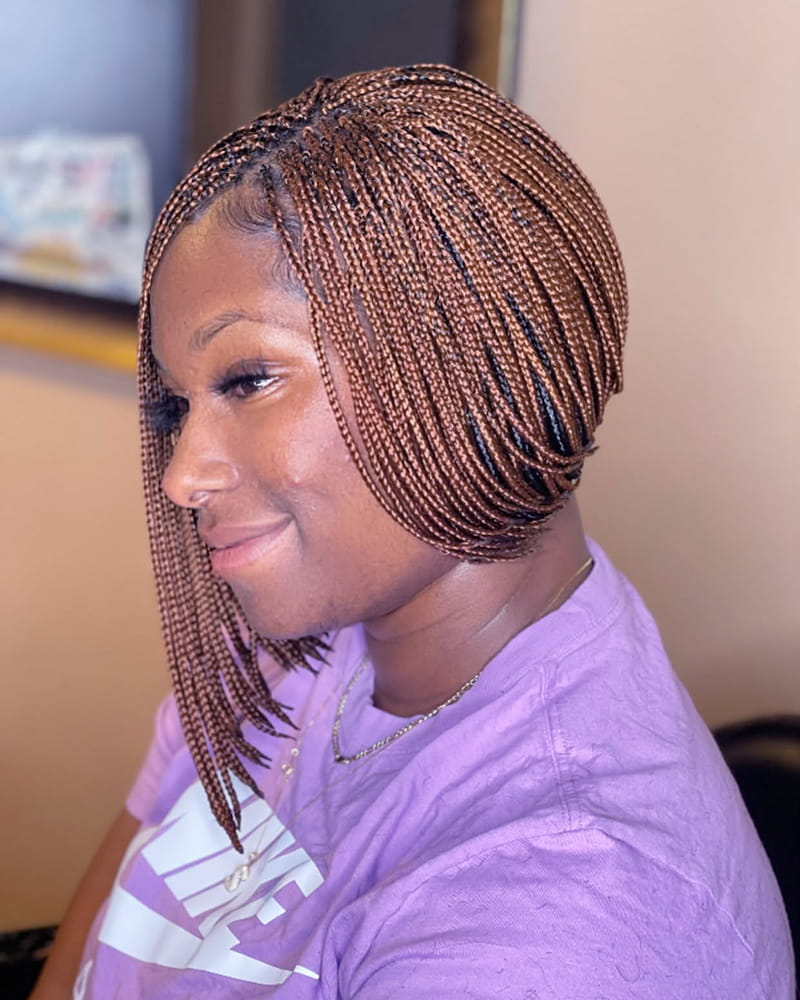
This look pairs two textures in one style. The sides and edges are cornrowed flat and close to the scalp, while the top and crown are left in curlier, fuller braids or twists. The contrast gives the shape more dimension than an all-one-texture bob.
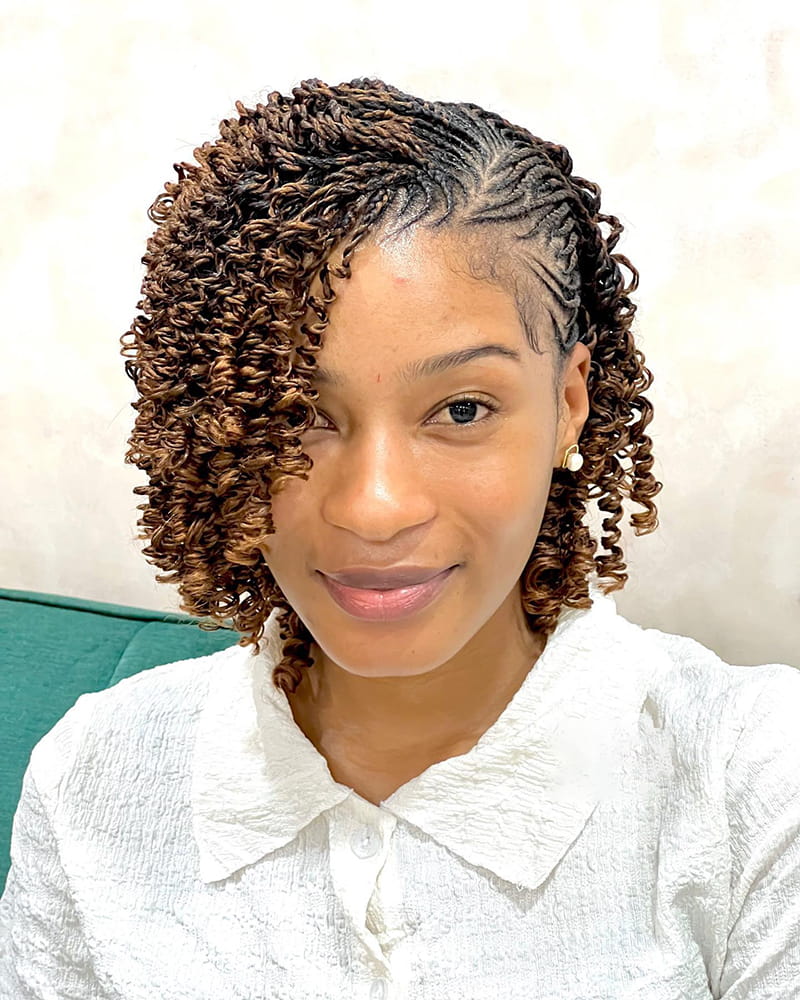
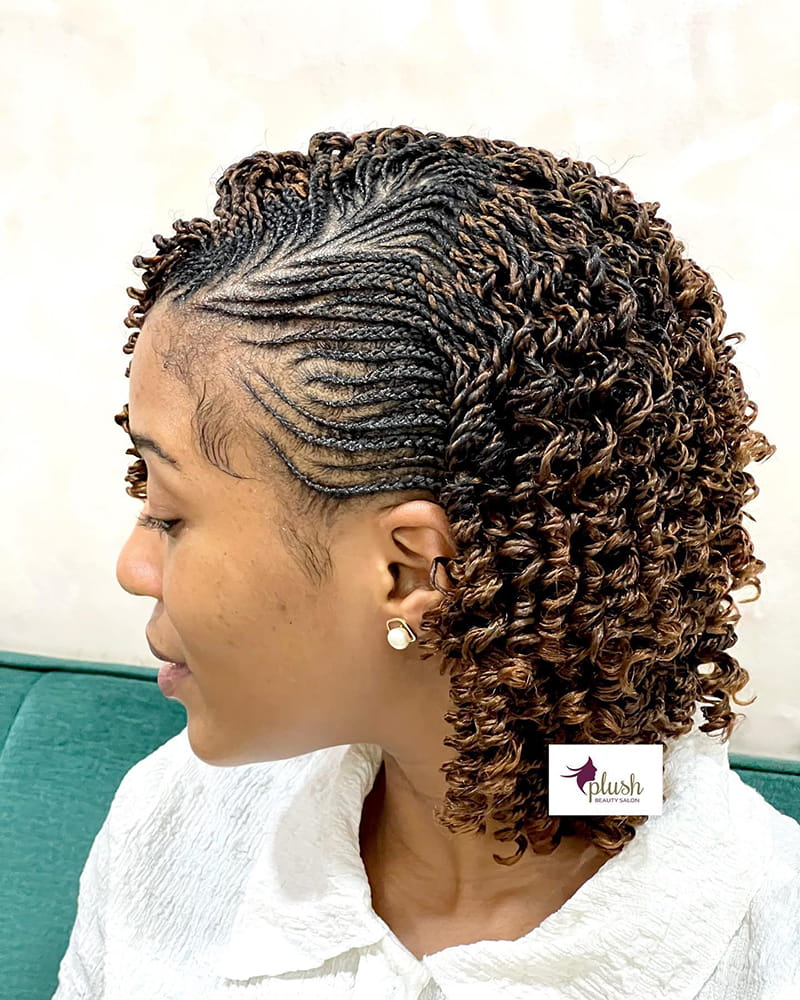
The flat sides also help keep edges laid and reduce bulk near the hairline, which some wearers prefer for lower tension near the temples. Expect around 3 to 5 hours for installation, with pricing typically between $200 and $350 depending on how curly and full the top section is. This style works well for anyone who wants texture on top without extra weight all over the head.
Peekaboo-Inspired Pixie Braids
Peekaboo color hides a pop of contrast underneath the top layer of braids instead of putting it out front. You only catch a glimpse of the color when hair moves, gets tucked behind an ear, or is worn half up.
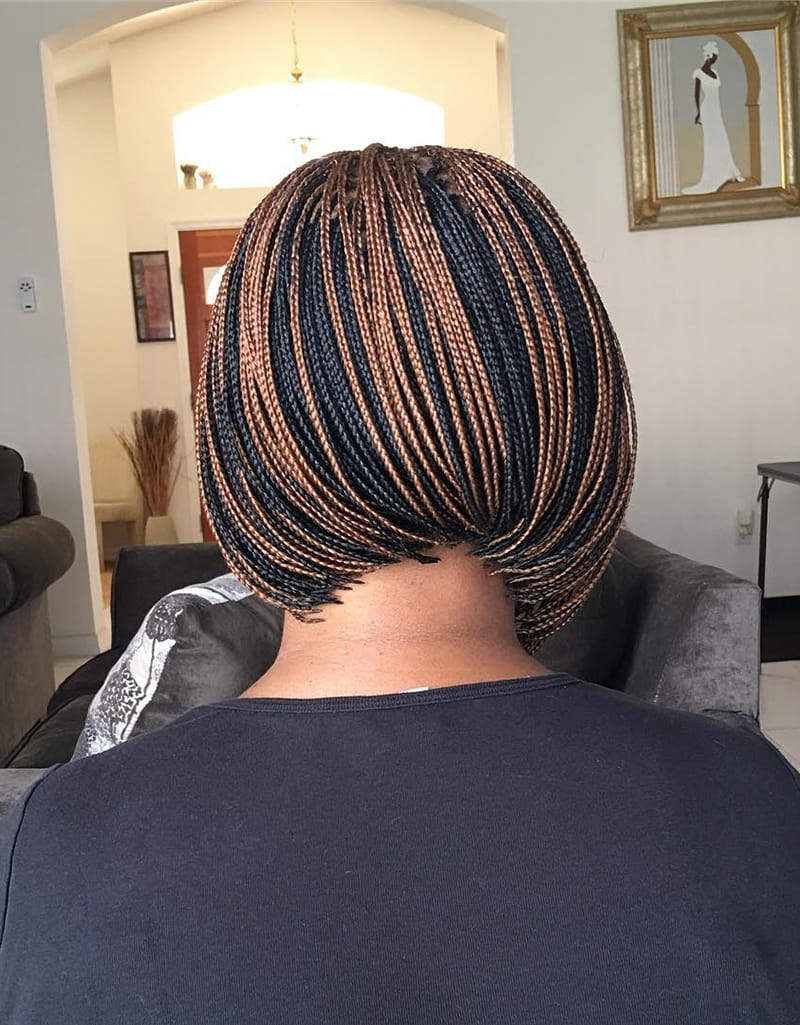
It is a good way to try a bold shade, like a bright red or platinum, without committing to a full head of color. Because it involves separating out a section for the contrasting shade, plan for a little extra prep time on top of a standard braid appointment, often pushing total time to 3 to 5 hours and cost to around $200 to $380 depending on the color used.
Swoop-In Micro Pixie Bob
This variation uses a deep, dramatic swoop across the front, similar to a finger-wave silhouette, made possible by the fine, flexible movement of micro-sized braids. You can pin, gel, or leave the swoop loose, depending on the occasion.

Because it uses micro braids, this style shares the longer install time of other fine versions, typically 4 to 6 hours, with pricing around $250 to $400. The dramatic front section also means you may want to protect it a little more carefully at night to keep the swoop shape from flattening or frizzing before your next restyle.
Feed-In Cornrow Front with Pixie Braid Ends
Feed-in cornrows start with your own hair at the root and gradually add extension hair as the braid moves back, which keeps tension lower right at the hairline. This front section then transitions into fully braided pixie ends at the bob length.
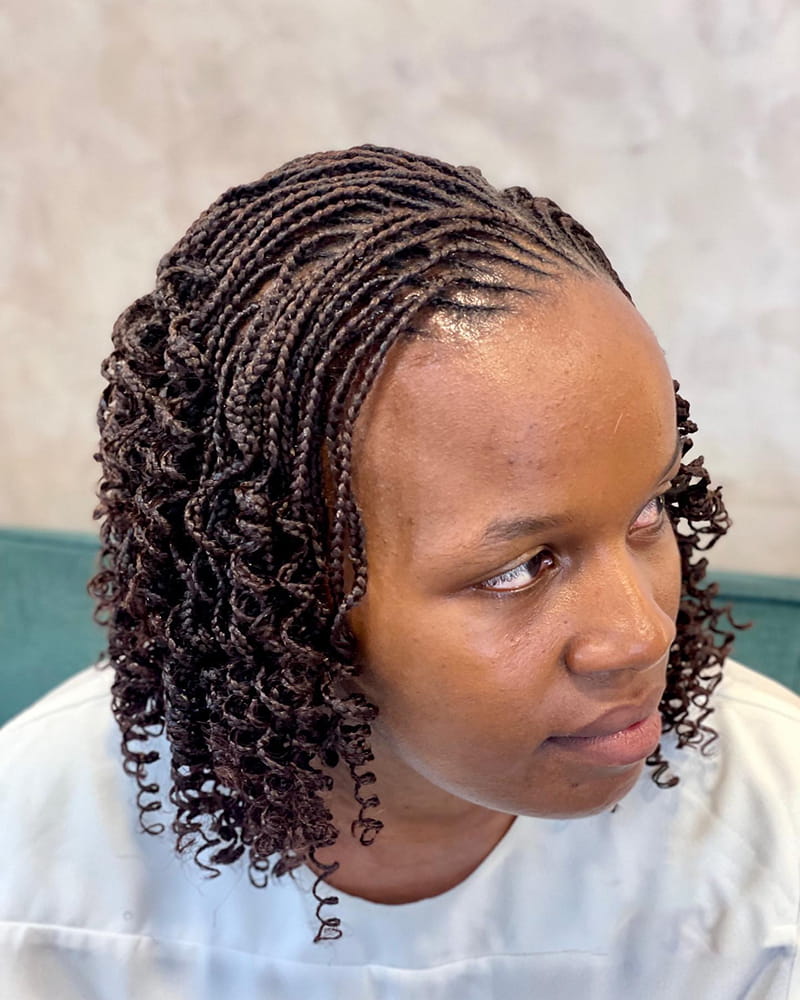
This combination is worth considering if your edges are sensitive or thinning, since the gradual feed-in technique avoids the tighter knot some traditional braids start with. Installation generally takes 3 to 5 hours, with pricing around $200 to $350. Ask your stylist to keep the feed-in especially loose around the very front hairline if you have any history of tension-related thinning there.
Pixie Braids with Curly Ponytail
Even at pixie length, braids can be gathered up. This version leaves enough length at the crown to pull the top section into a small curly ponytail or puff, while the rest of the bob stays down to frame the face.
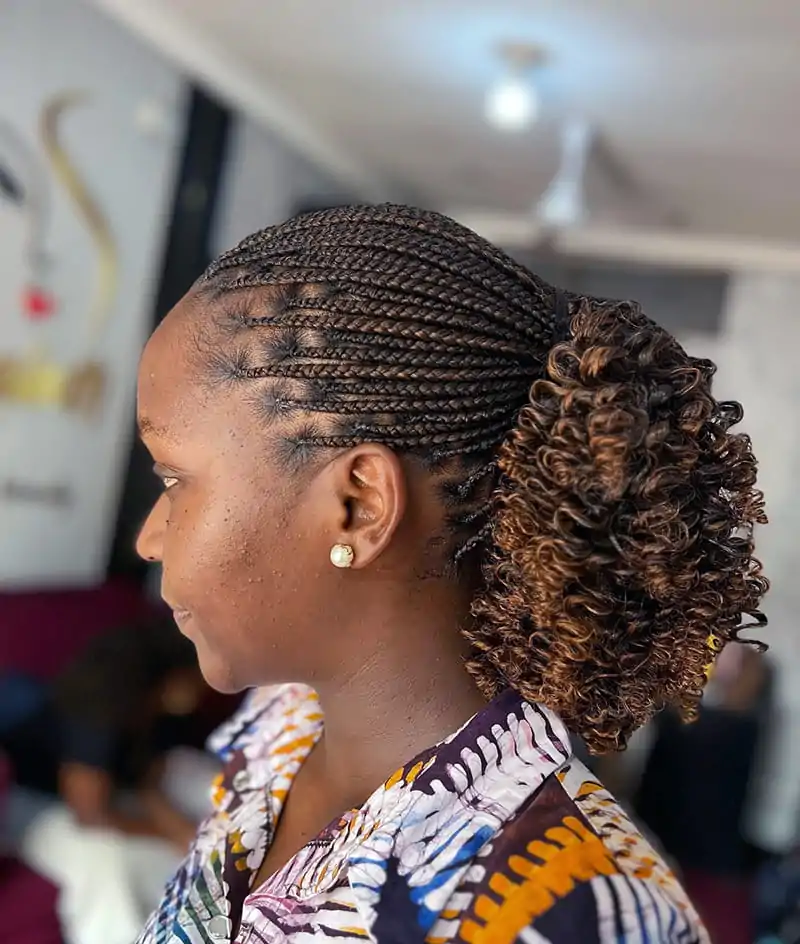
It is a nice option if you like having an “up” choice for workouts or hot days without committing to a full updo. Expect installation time and pricing similar to a classic medium bob, around 3 to 5 hours and $200 to $350, since the crown may need slightly longer braids than a typical pixie bob to allow for gathering.
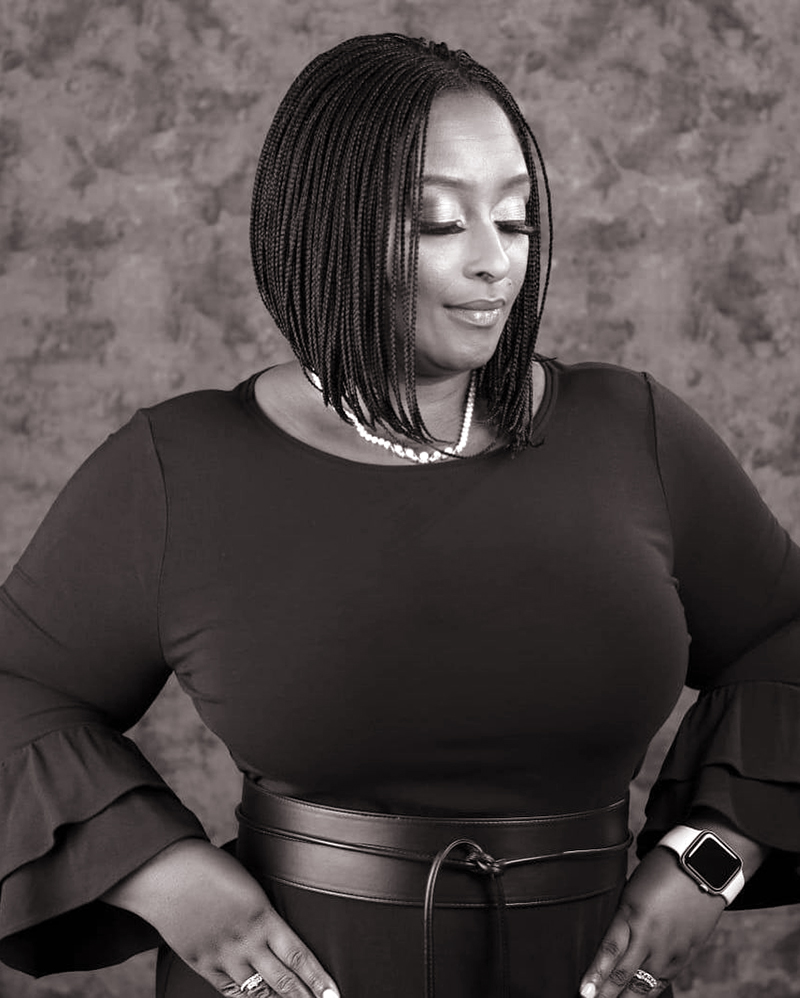
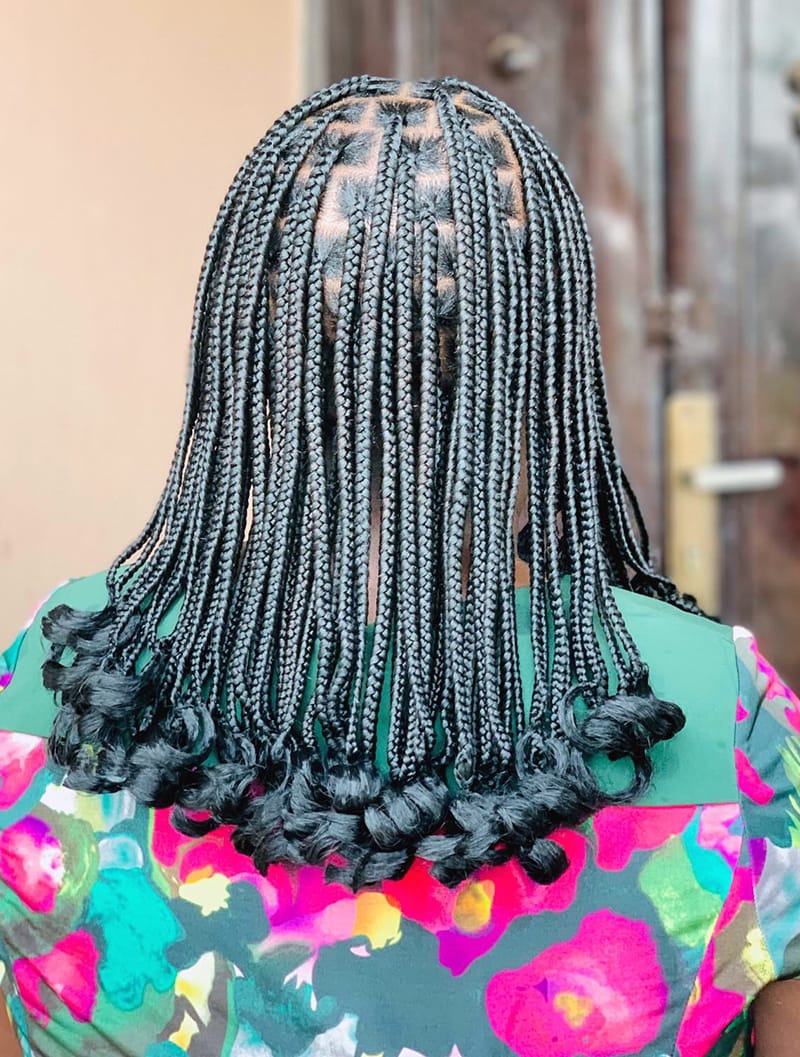
Classic Pixie Braid Bob Style
This is the foundation everyone else builds on: one braid size, one length, a simple part, no extra color or accessories. It is the version to try first if you are unsure which direction to take the trend.
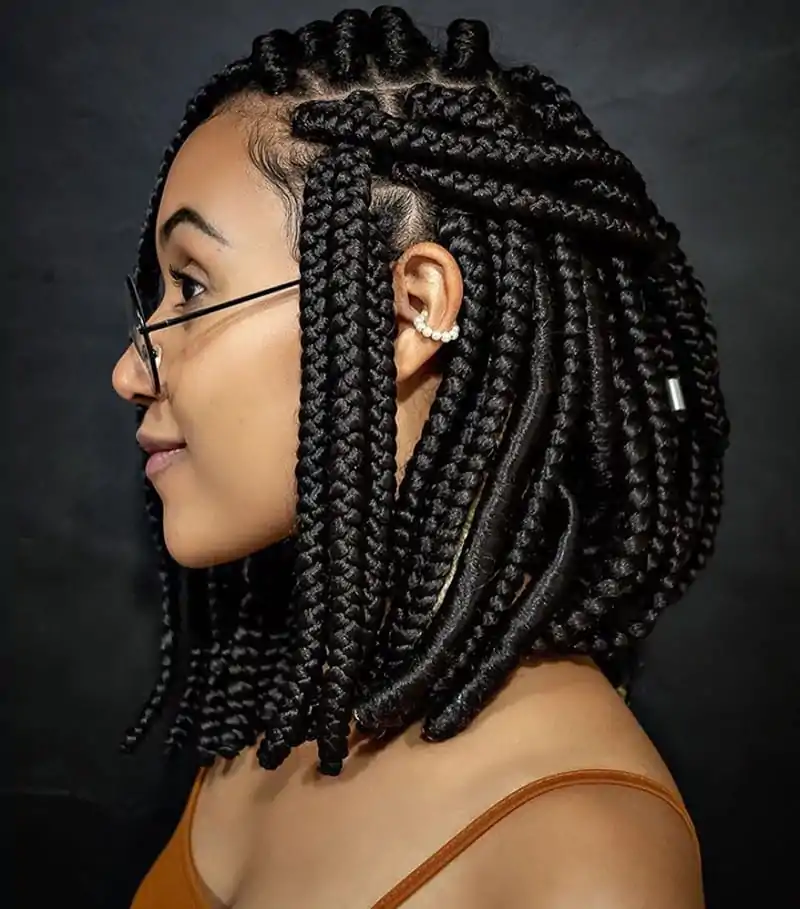
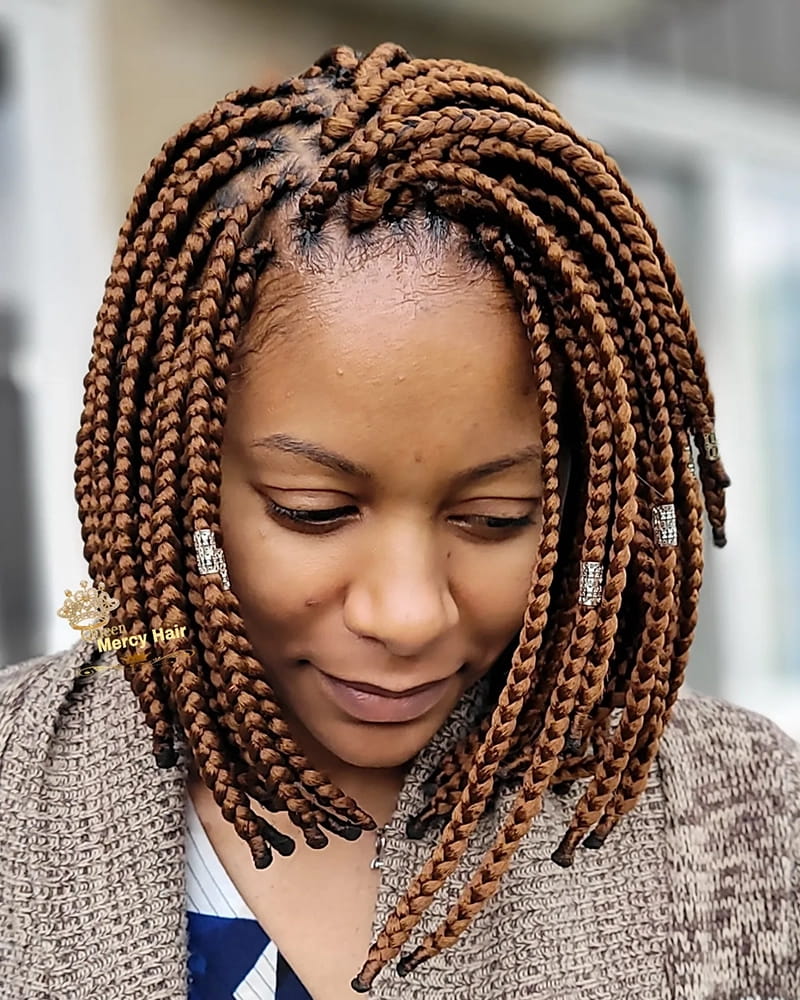
A classic bob in a medium braid size typically takes 2.5 to 4.5 hours to install, with pricing commonly landing between $150 and $300. Because it skips intricate parting or added color, it is often one of the more budget-friendly, lower-maintenance versions in this guide, and a good style to request if you want to see how you feel about short braids before trying a bolder variation.
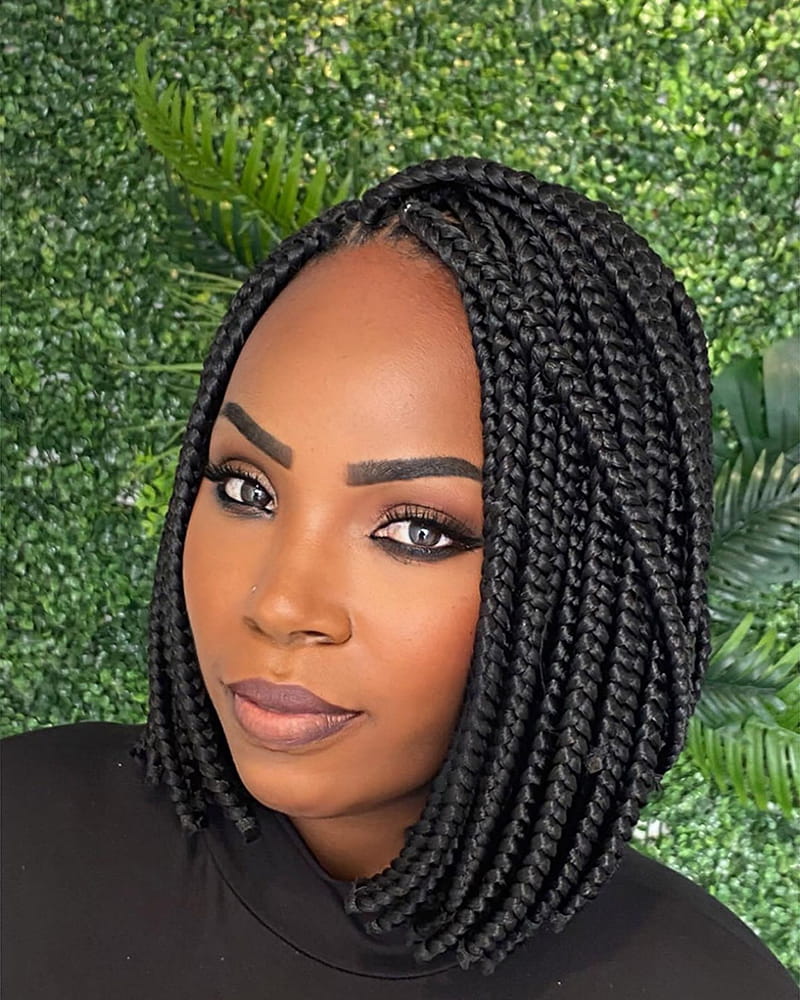
Pixie Braids with Spanish Curls
Spanish curl hair is known for tight, defined spirals that sit close and sleek rather than big and loose. Used at the ends of pixie braids, it gives the bob a polished, structured curl instead of a wide, voluminous one.
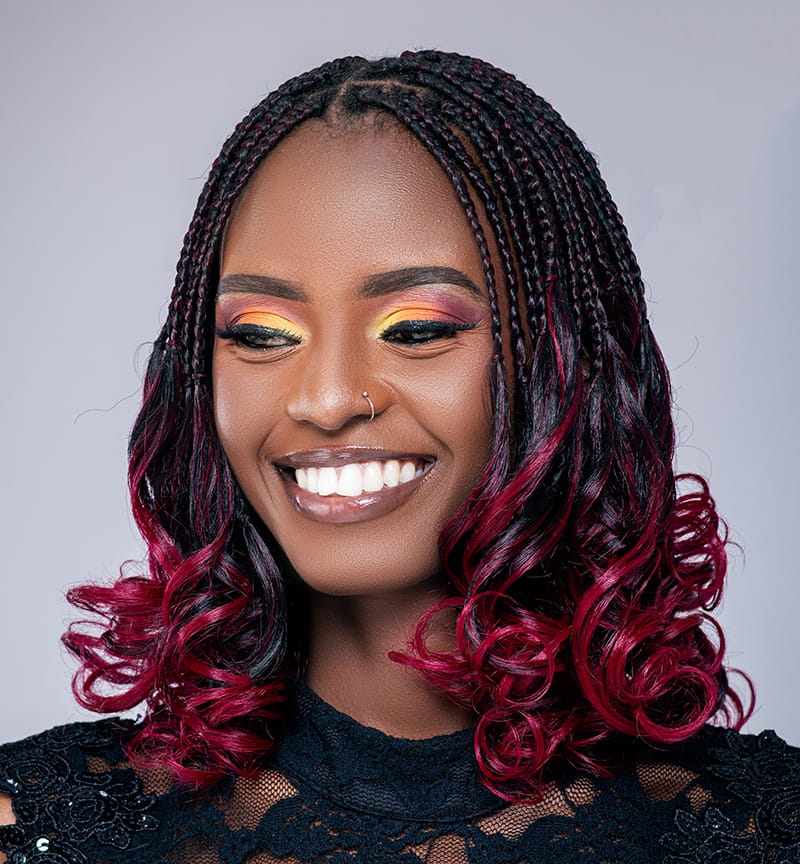
Because the ends need pre-curled hair and extra styling to set the spiral, expect a bit more time than a plain braid, generally 3 to 5 hours, with pricing around $200 to $380. This finish tends to hold its shape well between wash days, making it a solid pick if you want defined curl without daily restyling.
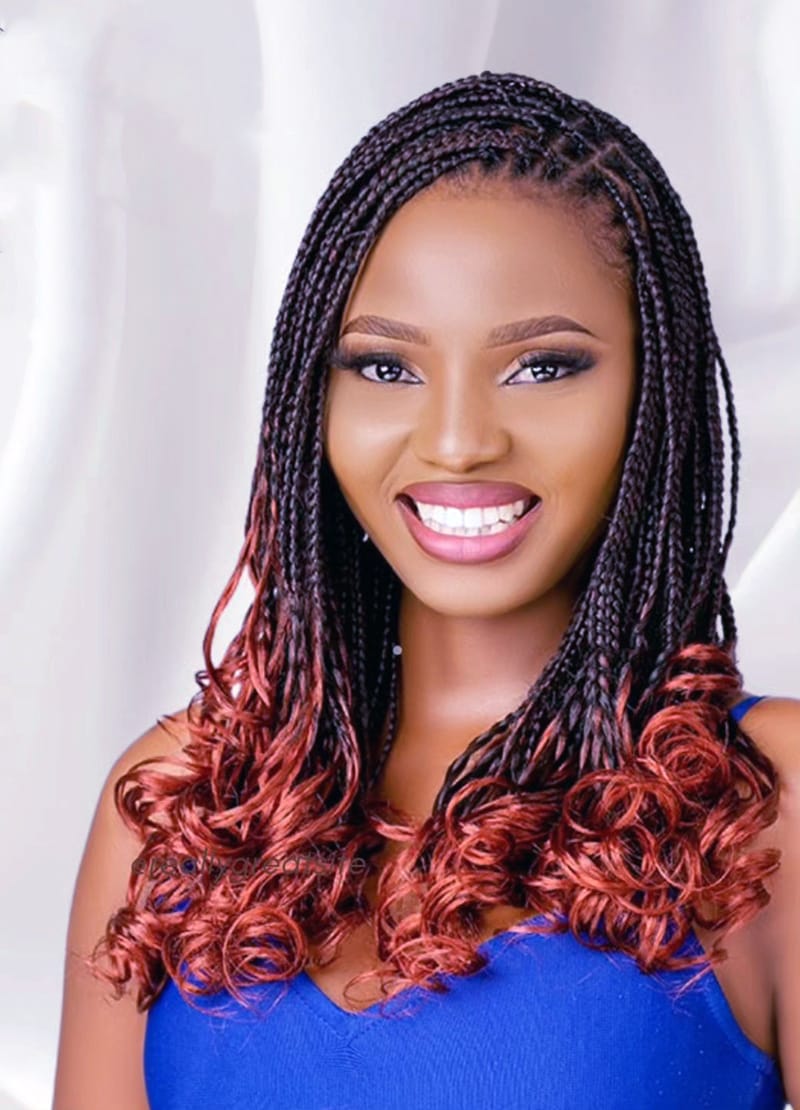
Honey Blonde Curled-End Pixie Bob
Warm honey blonde extension hair, paired with curled ends, gives this bob a soft, sun-kissed finish. The lighter color also makes the curl pattern at the ends more visible, since light shades tend to show texture and movement more than deep black hair.
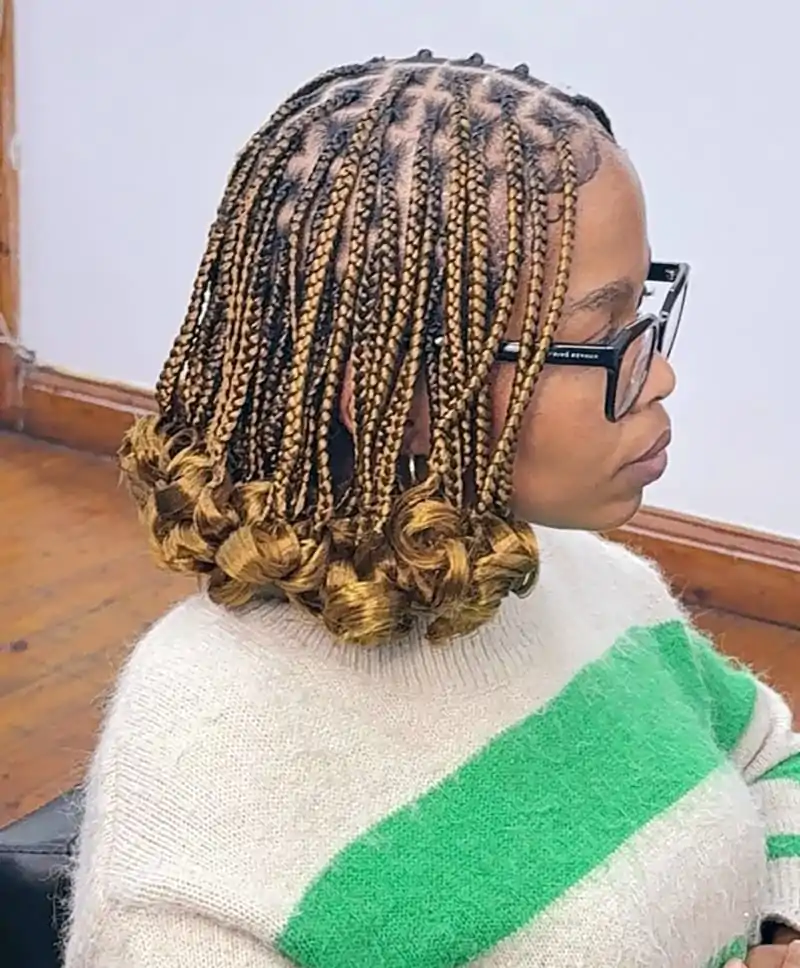
Colored braiding hair, especially lighter shades, sometimes costs a little more than natural black hair, so budget slightly above a classic bob, roughly $220 to $400, with a similar install time of about 3 to 5 hours. If you want to test a lighter shade without a long-term commitment, this is a low-risk way to try it, since the color comes out with the braids.
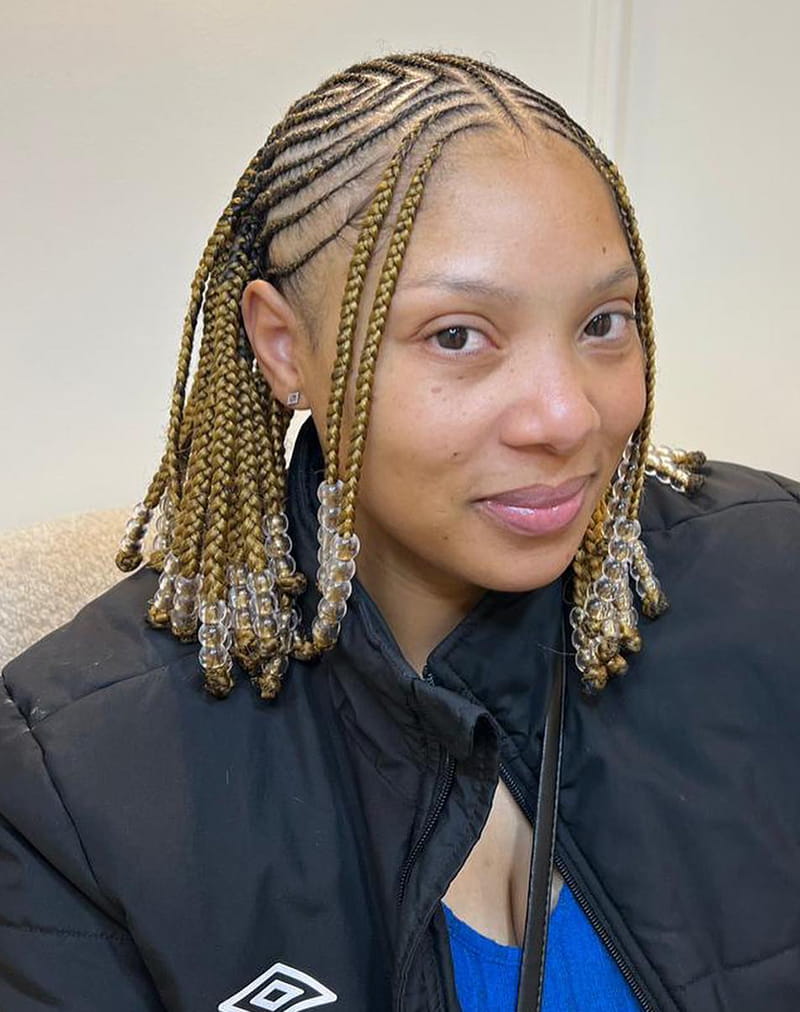
Cornrow to Pixie Braid Bob
This style cornrows the top and crown flat against the scalp, then lets the braiding transition into looser, individual pixie braids for the rest of the length. It reads as one cohesive bob but mixes two braid techniques in a single install.
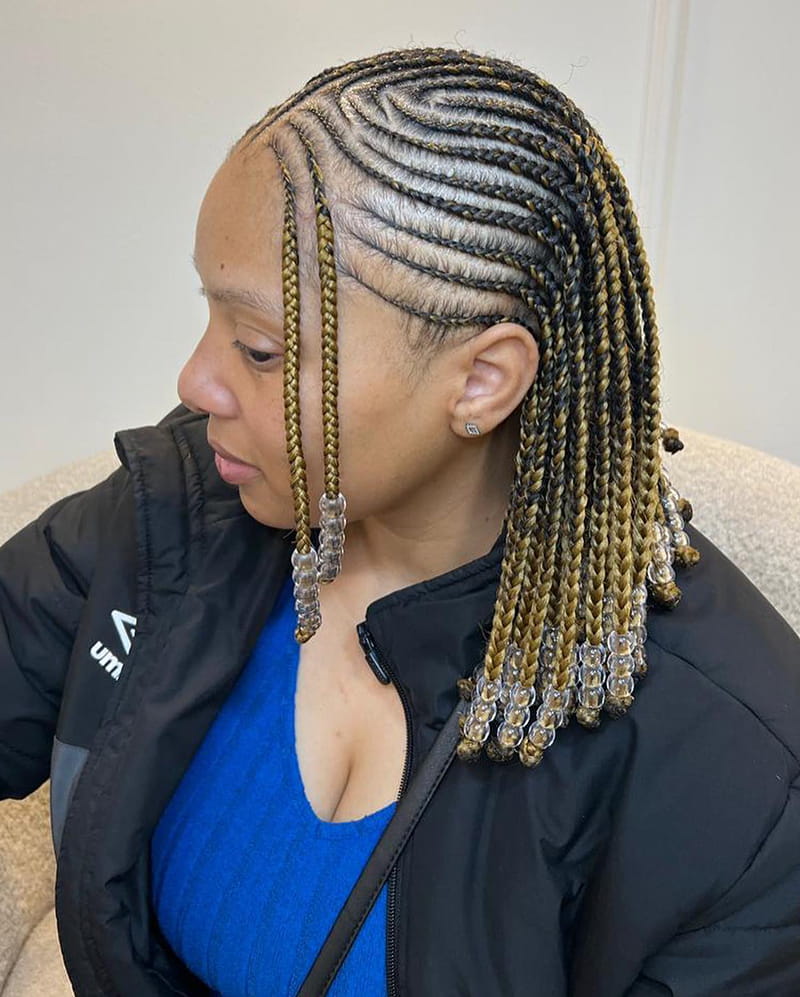
The flat top helps reduce bulk and can make re-parting or restyling easier between salon visits. Time and pricing sit close to a cornrow-heavy style, around 3 to 5 hours and $180 to $320. It is worth asking your stylist to point out exactly where the transition will fall, since that placement changes the overall shape quite a bit.
Chunky Pixie Box Braid Bob with Hair Cuffs
Bigger, chunkier box braids give this bob a bold, graphic look, and the larger size leaves plenty of room to slide on metal or wooden hair cuffs for extra shine. Fewer, thicker braids mean the accessories actually have room to sit and show.
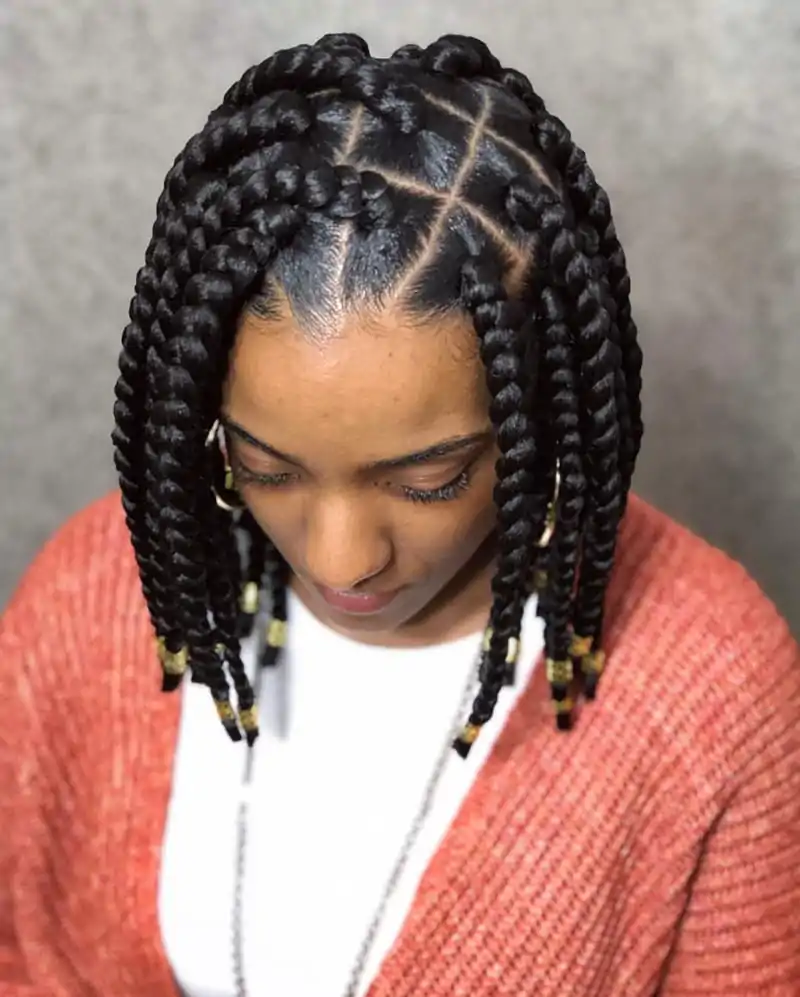
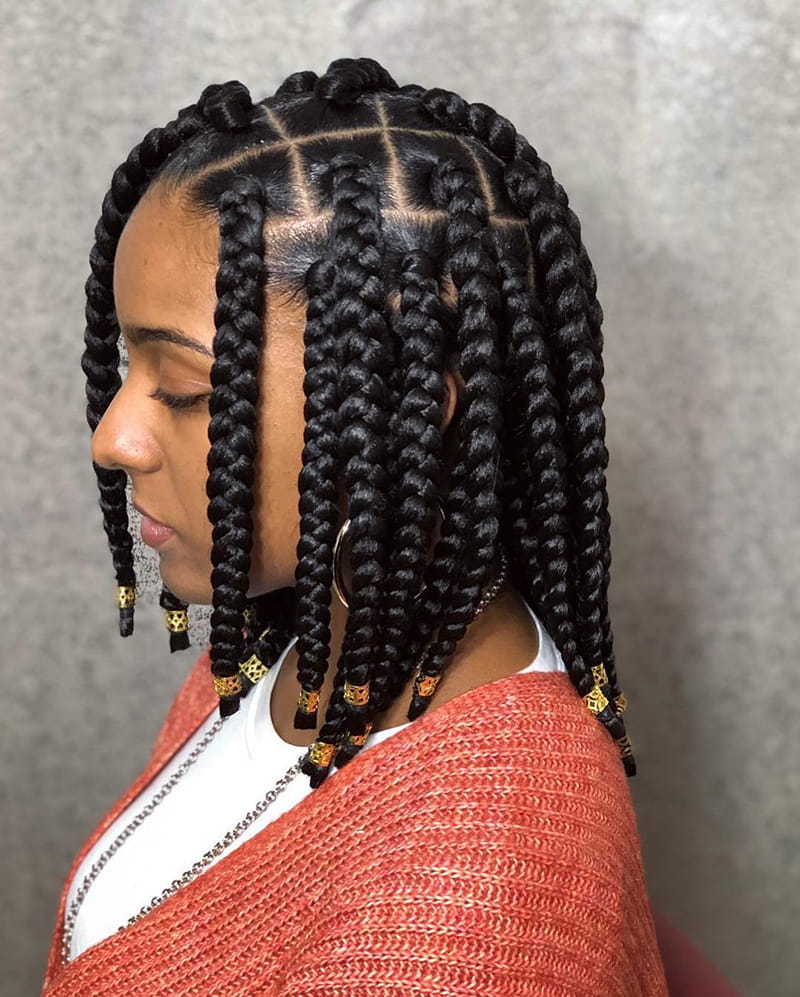
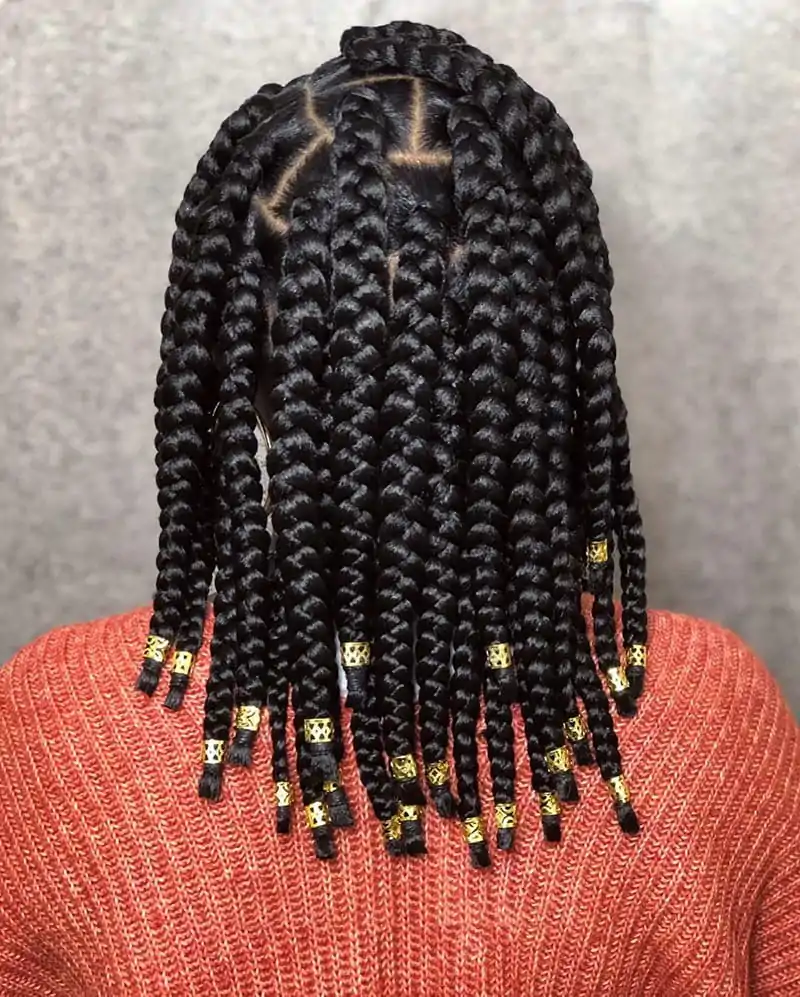
Larger braids are also one of the faster options in this guide, often finishing in 1.5 to 3 hours, with pricing around $120 to $220 before cuffs. Keep in mind that metal cuffs add weight, so avoid stacking too many near the hairline if your edges are already delicate. For more chunky inspiration, browse these big box braid styles.
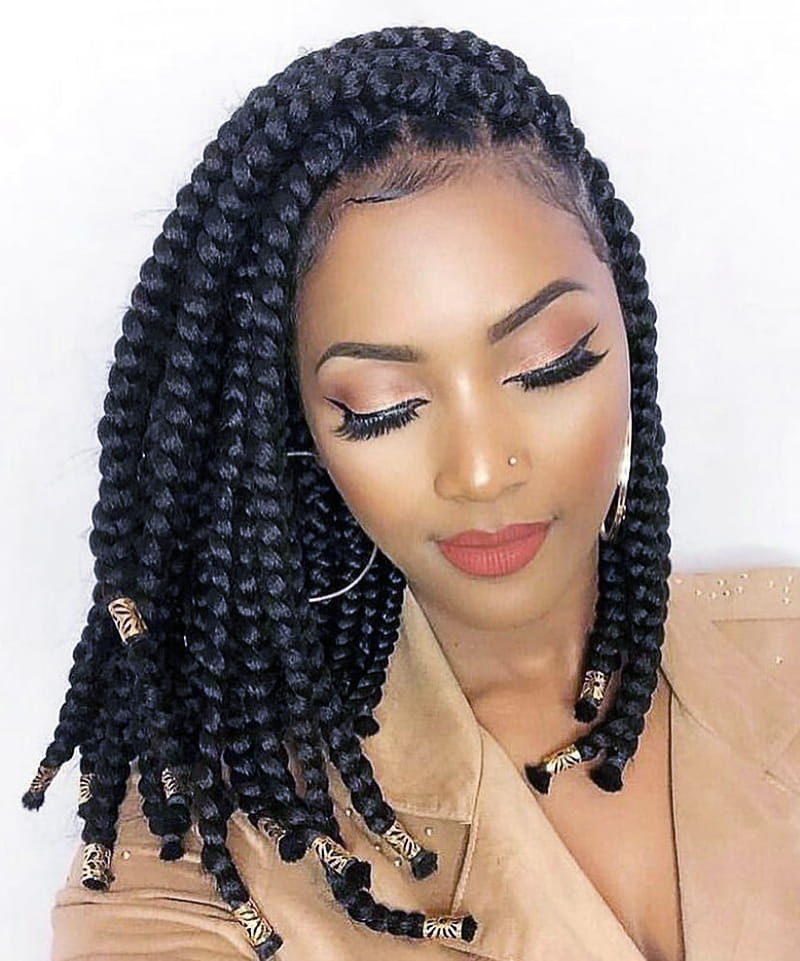
Classic Medium Pixie Braid Bob
Medium-sized braids split the difference between the quick, chunky look and the fine, time-intensive micro size. This makes the medium pixie bob a popular starting point for first-timers who want a defined braid without an all-day appointment.
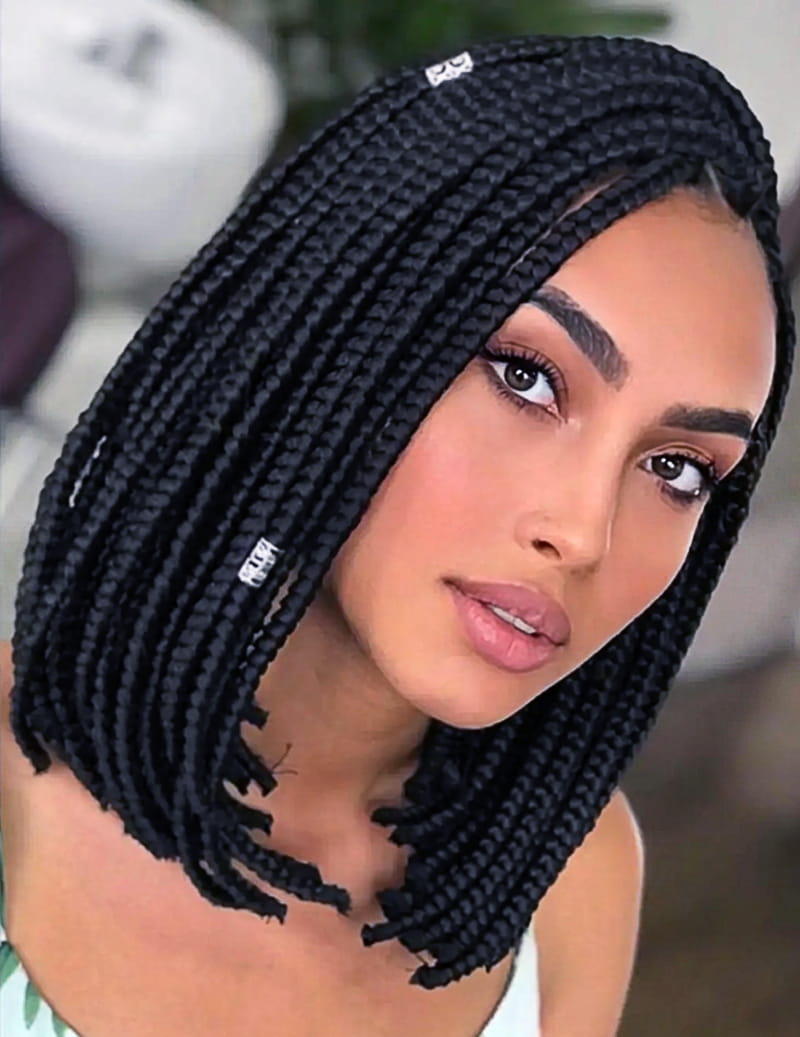
Installation usually takes 2.5 to 4.5 hours, and pricing tends to fall between $150 and $280. The medium size also holds up well over the life of the style, since it is thick enough to resist frizzing as quickly as smaller braids but still delicate enough to look intentional rather than bulky.
Layered Pixie Braid Bob with Curled Ends
Layering brings the same idea used on natural haircuts into braiding, with different sections cut to slightly different lengths to create movement instead of one blunt line. Curled ends soften where each layer falls, so the transitions blend rather than look choppy.
View this post on Instagram
This detail work adds some time to the appointment, generally 3 to 5 hours, with pricing around $200 to $350. Layered braid bobs tend to look fuller through the crown, a flattering option if you want extra shape and volume rather than one flat line all the way around.
Goddess Pixie Bob
Goddess braids are known for their thick, raised, rope-like look, often left frizz-free with a boho, wrapped finish. Brought into a bob length, they give a pixie cut serious volume and a decorative, almost regal presence.

Because the braids are thicker, this style tends to take a bit longer than fine braiding, typically 2 to 4 hours, with pricing around $150 to $300. It is a strong option if you love the goddess braid look but want something shorter and lower commitment than a full-length version. See more full-length ideas in this goddess braids guide.
Pixie Bob with Italian Curls
Italian curl hair has a bouncier, more voluminous ringlet than the tighter Spanish curl, which gives this bob a fuller, more boho finish at the ends. The curl pattern tends to read as softer and more relaxed than a sleek spiral.

Since the curled hair needs to be prepped and set before or during install, plan for around 3 to 5 hours in the chair, with pricing near $200 to $380. This finish pairs especially well with medium or larger braids, since the fuller curl needs a little room at the ends to really show its shape.
Small Pixie Braid Bob with Curled Ends
Sitting between medium and micro, small braids give a more refined, delicate look than chunkier styles while still installing faster than true micro braiding. Curled ends add softness to what could otherwise read as a very structured, uniform style.
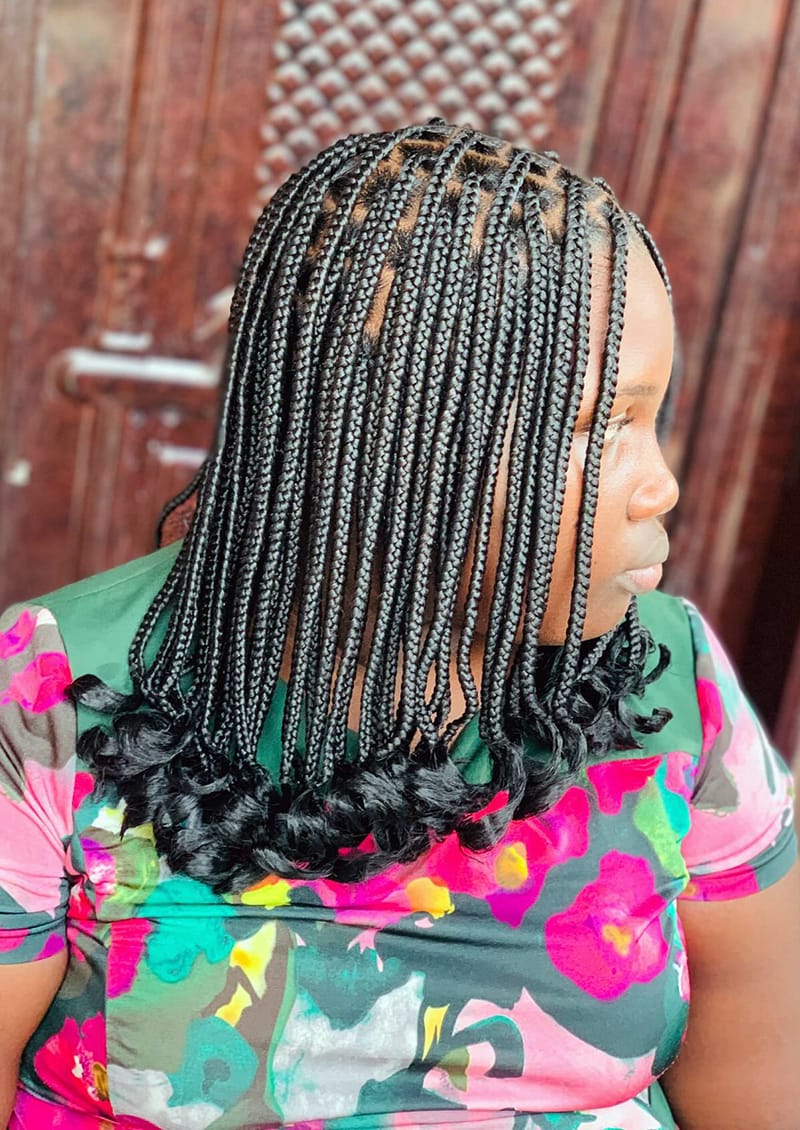
Expect this size to run longer than a medium bob, generally 4 to 6 hours, with pricing around $220 to $400. The smaller braid diameter also means the bob will hold its shape a little longer between touch-ups, since there is less hair per braid to loosen as new growth comes in.
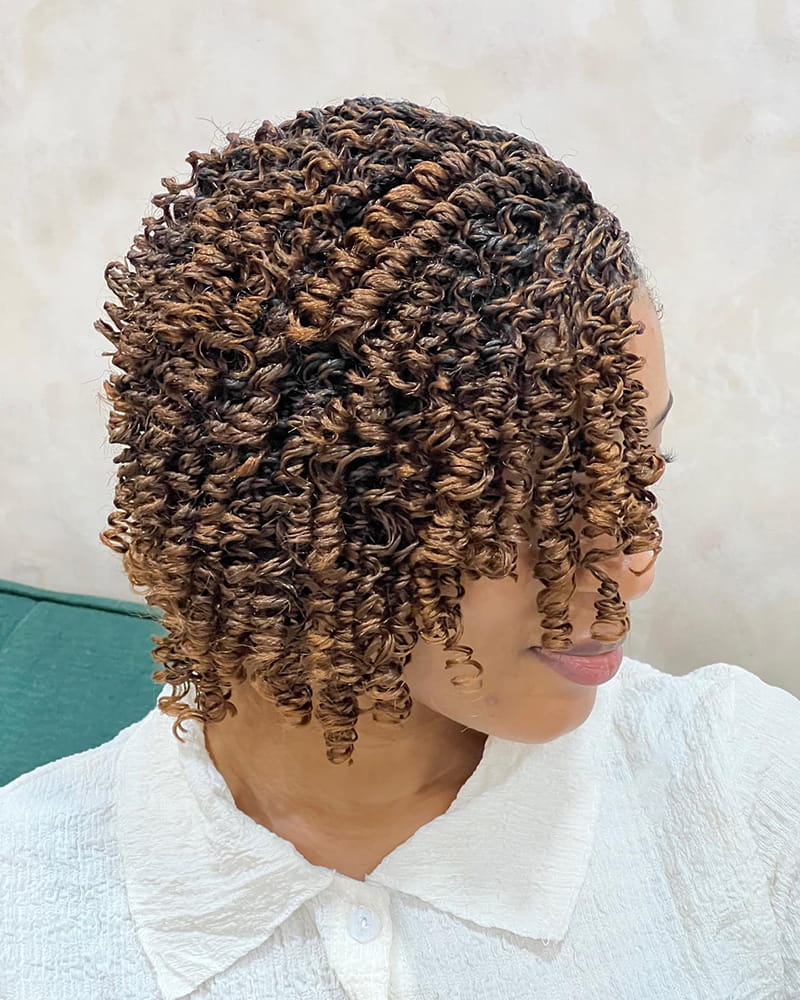
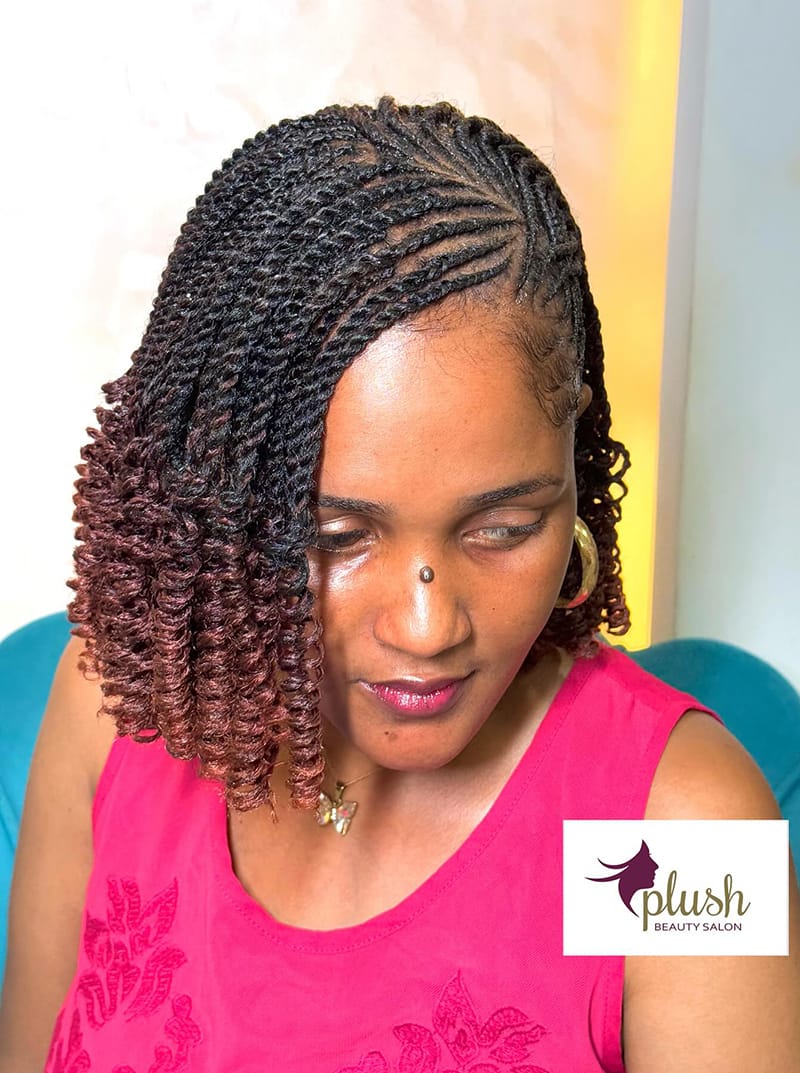
Side-Swept Spring Twist Pixie Bob
Spring twist hair is lighter and springier than standard twist hair, made from tightly curled extension fiber that bounces back into shape when you tug it. Swept to one side, it gives this pixie bob a soft, casual, effortless feel, close in spirit to the side braid looks many women already love.
View. (Image: @plush_naturalhairtz)
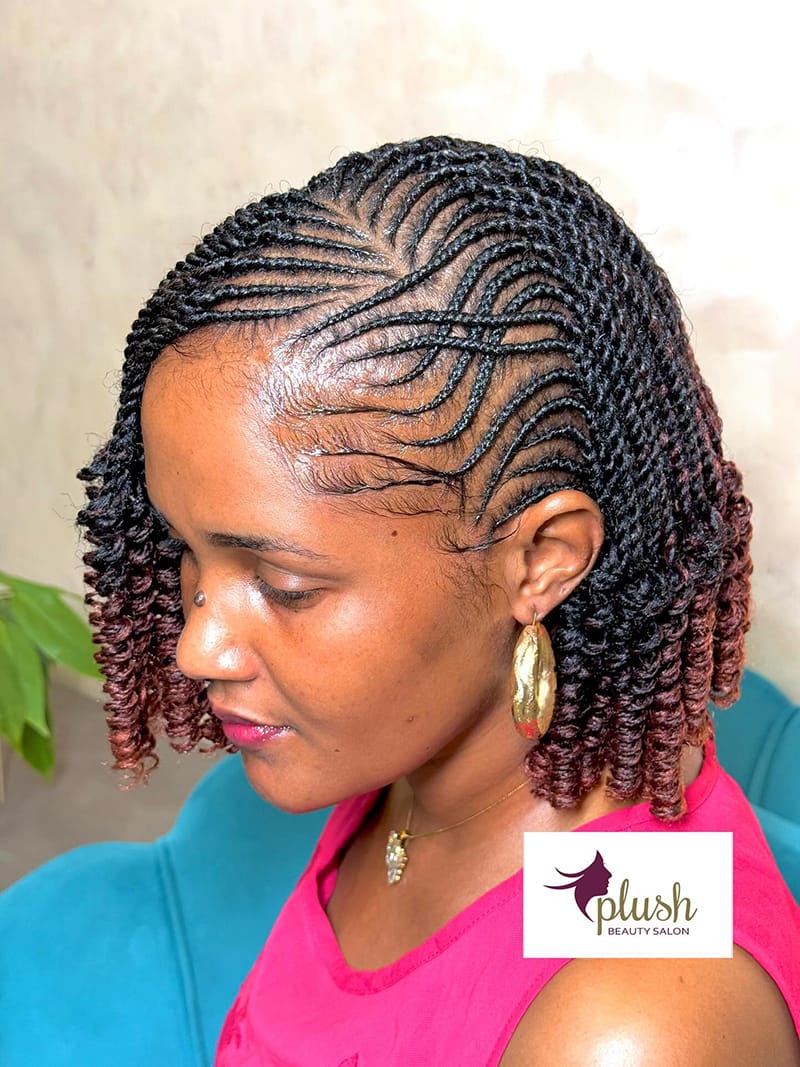
Because spring twist hair uses less material per section than some twist styles, it is often more lightweight, which can mean less pull on the scalp over time. Installation tends to run 2.5 to 4.5 hours, with pricing around $180 to $320.
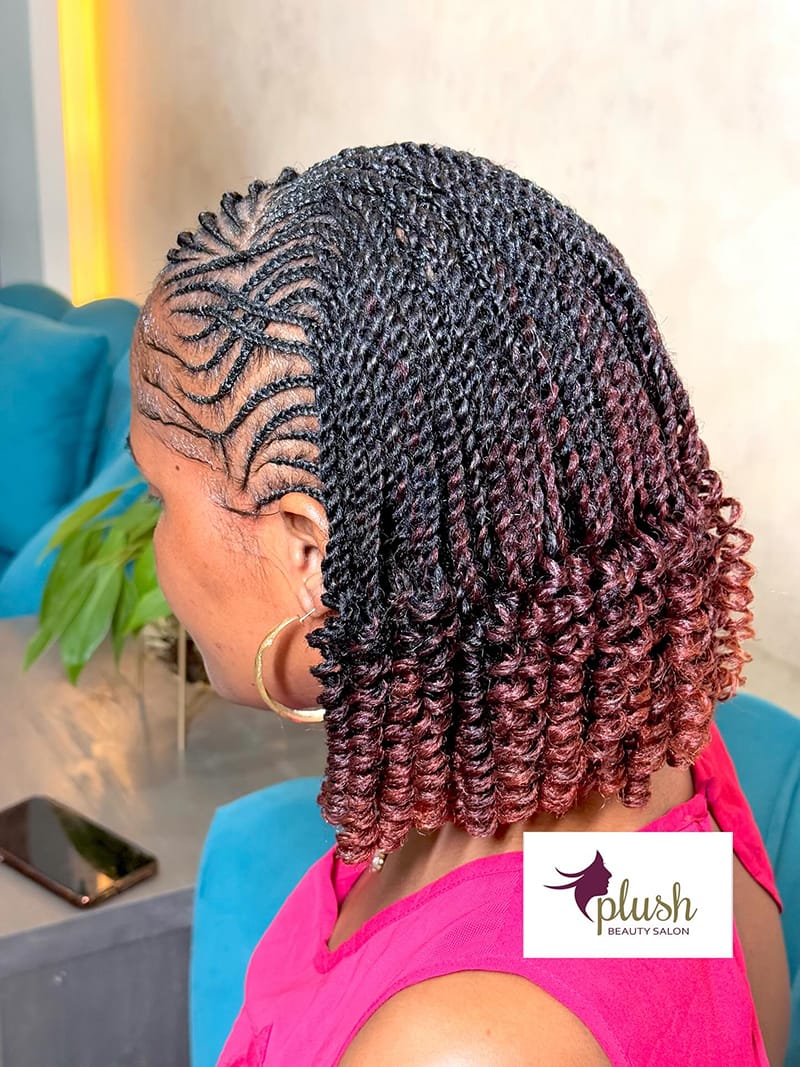
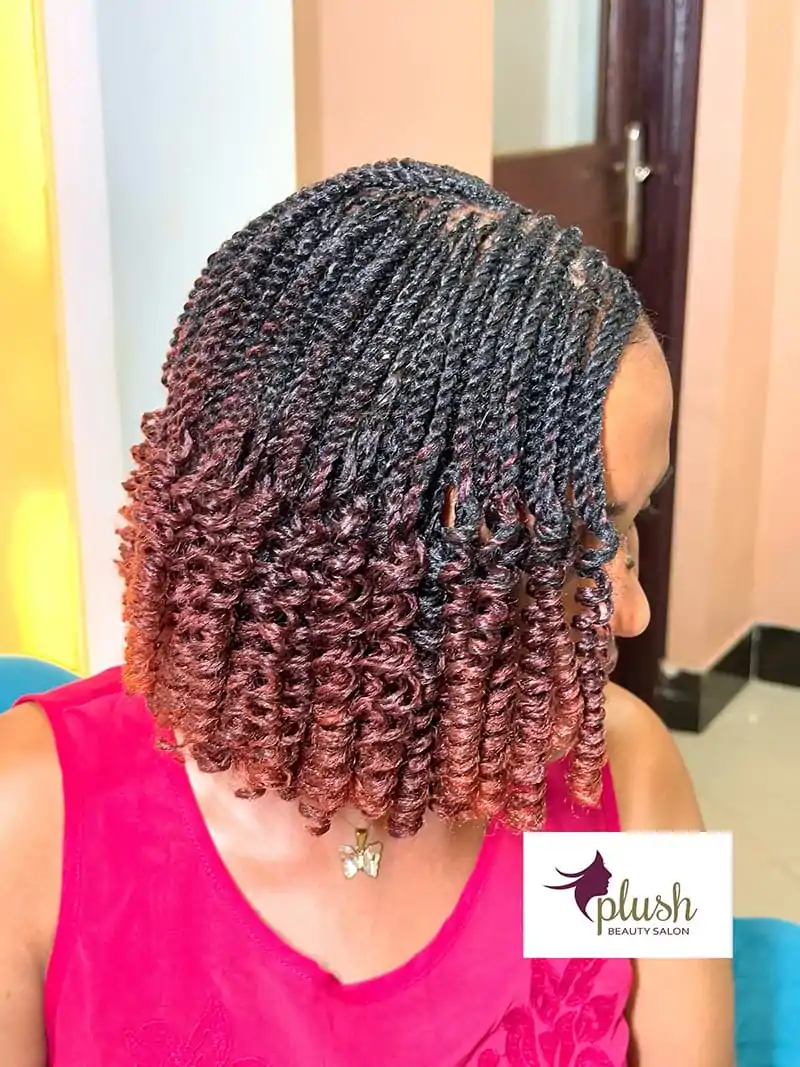
Micro-Twist Pixie Bob with Scalp Cornrows
This version pairs the fine texture of micro twists with a visible cornrow design at the scalp, turning the part itself into part of the style. The cornrow pattern can run straight back, curved, or angled depending on what your stylist maps out.
View this post on Instagram
Combining two detailed techniques makes this one of the longer appointments in this guide, often 4.5 to 6.5 hours, with pricing around $280 to $450. It is worth bringing a clear reference photo of the exact parting pattern you want, since scalp designs are hard to adjust once braiding has started.
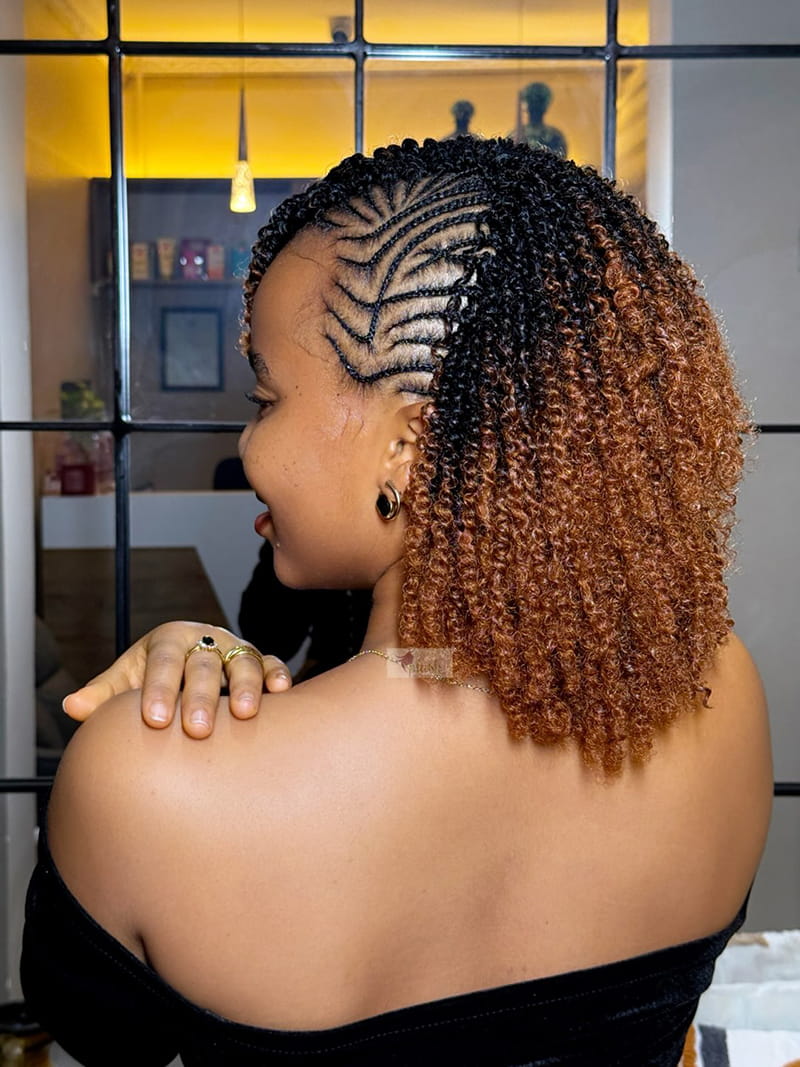
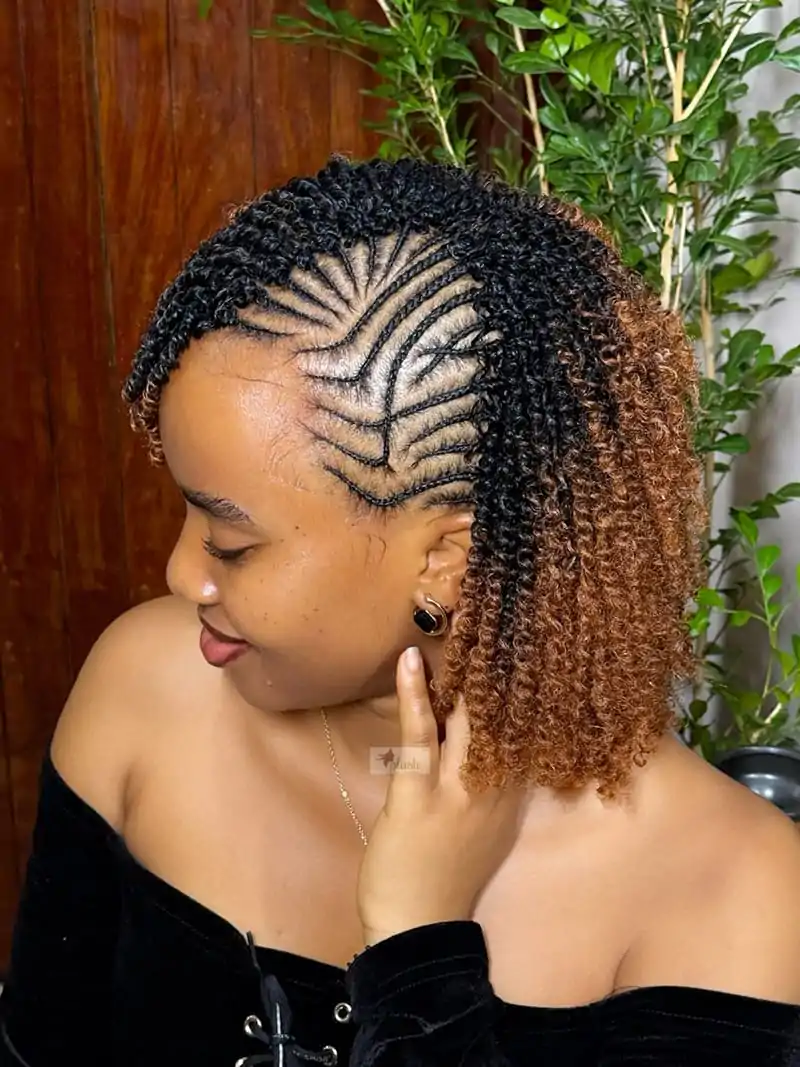
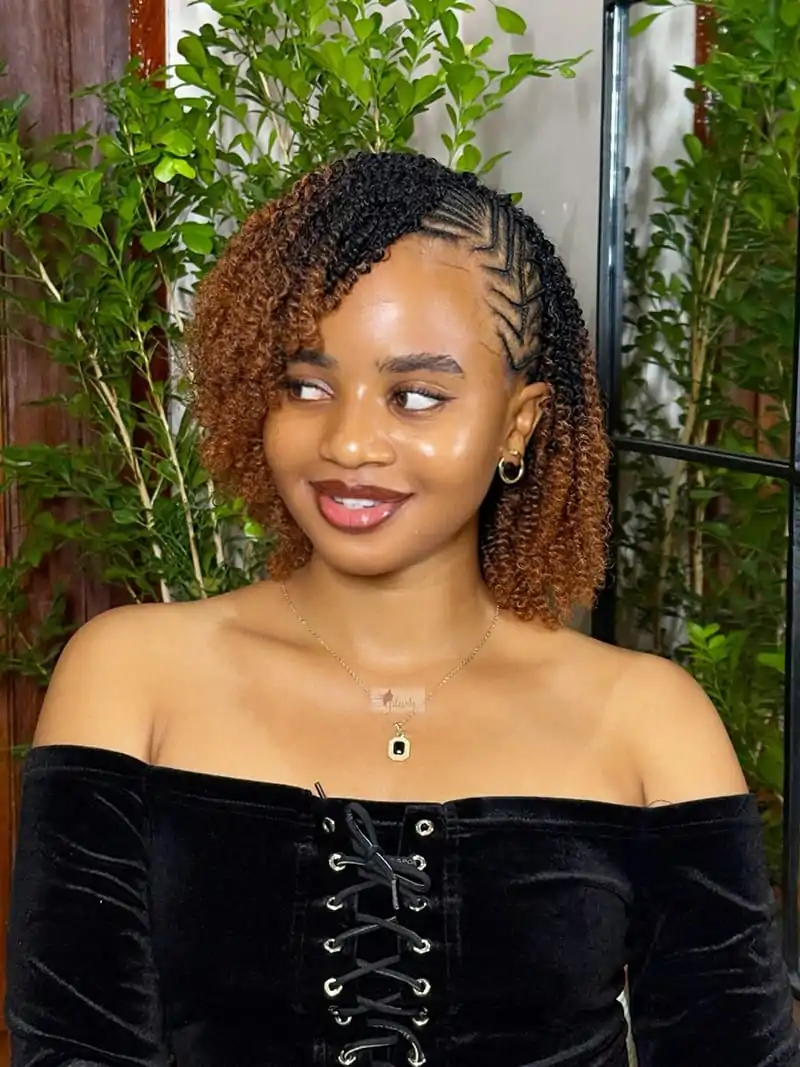
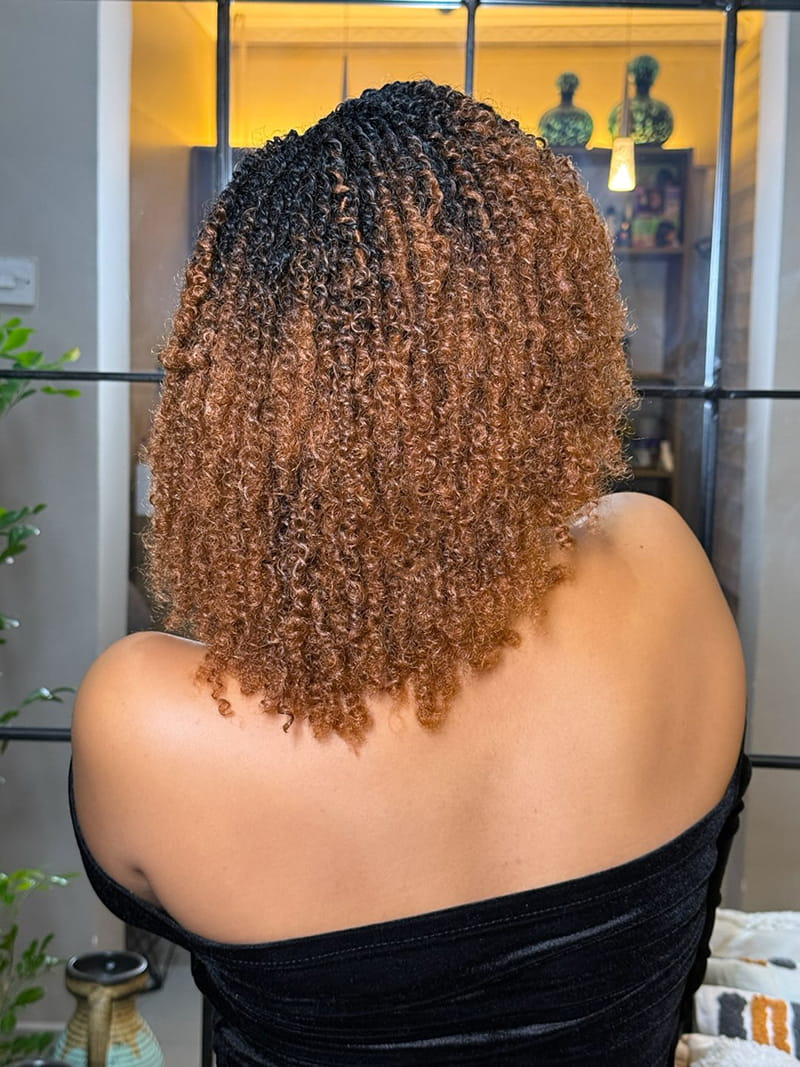
Layered Stitch Cornrow-to-Pixie Braid Bob
Stitch cornrows use a technique that creates a raised, defined ridge along each row, giving the part lines a clean, almost sewn-together look. Here, that detailed cornrow work at the top transitions into layered braid ends for a structured but shaped bob.
View this post on Instagram
The stitching technique takes a practiced hand, so plan for a longer visit, roughly 3.5 to 5.5 hours, with pricing around $220 to $380. This style tends to look especially neat right after installation, a good pick for an event or the first couple of weeks of a new look.
Classic Pixie Braids with Clear Beads
Clear or translucent beads add subtle shimmer to braid ends without introducing bold color, which makes this a versatile option for work or more formal settings. The beads catch light as you move rather than standing out as a bright accent, similar in spirit to the wider world of braids with beads.
View this post on Instagram
Standard braid pricing applies here, around $180 to $330 for 3 to 5 hours of work, plus a small amount for the beads themselves. Because beads add weight, ask your stylist to place them mainly at the ends rather than close to the root, especially if your hairline is sensitive.
Classic Auburn Pixie Braid Bob with Geometric Parting
A rich auburn shade gives this bob warmth, while a deliberate geometric parting- think triangles or diamond shapes at the root- turns the scalp itself into part of the design. It is a more editorial, planned-out take on the classic bob.
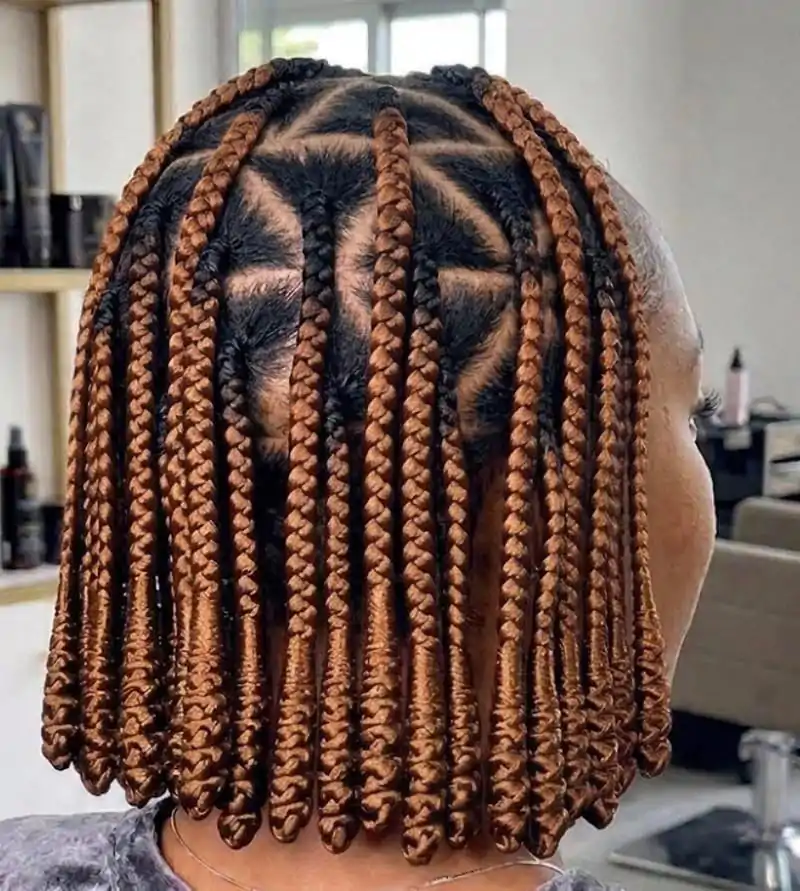
Mapping out a geometric part takes extra prep before the braiding even starts, so plan on a longer appointment, around 3.5 to 5.5 hours, with pricing near $220 to $380. This style photographs especially well, making it a popular choice for a special event or a fresh seasonal change.
Layered Feed-In Braid Bob with Beads
This look combines the low-tension feed-in technique at the root with layered braid lengths and beaded ends. The gradual feed-in keeps the hairline comfortable, while the layering and beads add shape and a bit of sparkle to the finished style.
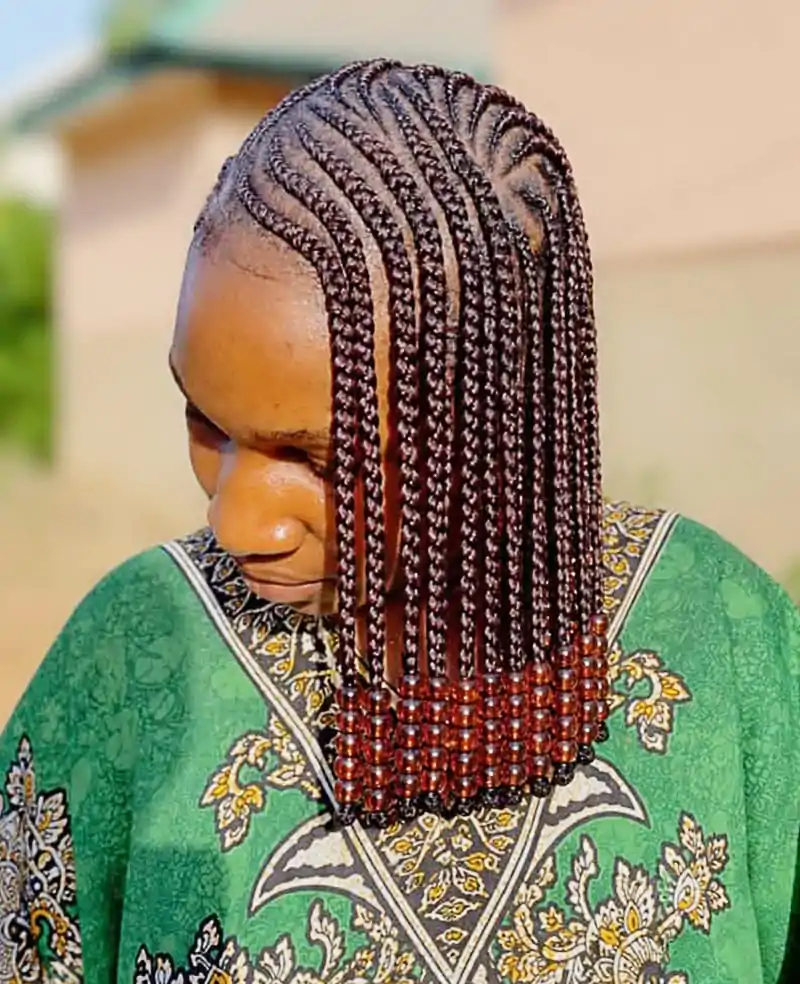
Expect around 3 to 5 hours for installation, with pricing near $200 to $350 depending on how many beads you add. Because feed-in braids start softer at the root, this version is a reasonable option for anyone easing into braided styles after a history of tighter installs.
Layered Micro Cornrow Bob
Fine, micro-sized cornrows across the entire scalp create a sleek, almost sculpted look, and layering the lengths keeps the shape from reading as one flat helmet of braids. It is one of the more detailed, all-over patterns in this guide.
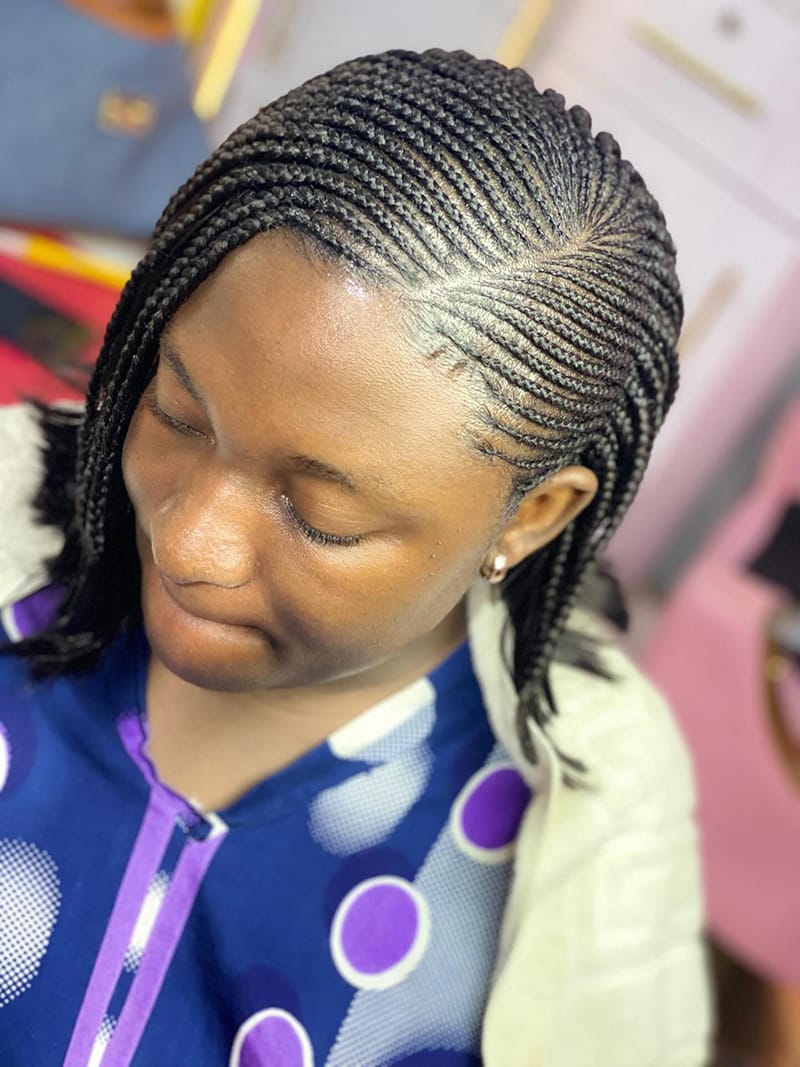
Because it combines two time-intensive techniques, fine cornrowing and layered shaping, this style runs on the longer side, typically 4 to 6.5 hours, with pricing around $250 to $450. It tends to hold its sharp, defined look for several weeks with proper nighttime care.
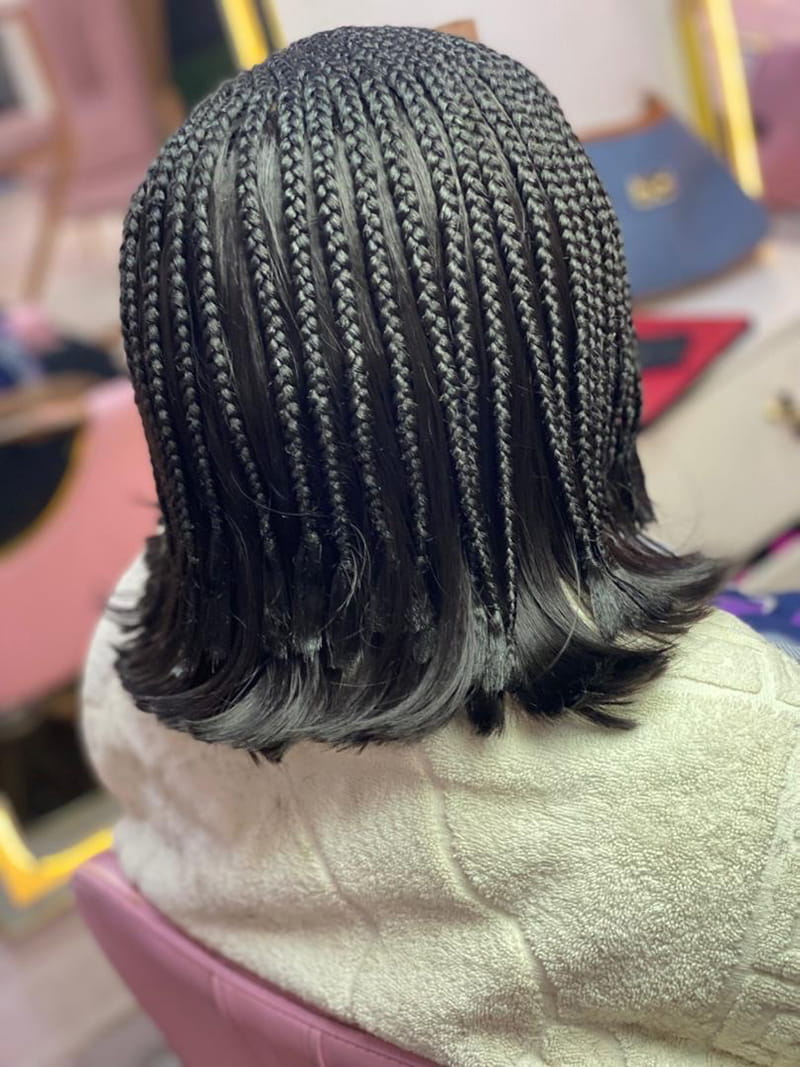
Classic Auburn Pixie Braid Bob
Unlike the geometric-parted version above, this take on auburn pixie braids keeps the parting simple, straight back or with one clean line, letting the color do the talking. It is an easier, more everyday version of the same warm shade.
View this post on Instagram
Because it skips intricate parting, this style installs a bit faster than its geometric counterpart, generally 2.5 to 4.5 hours, with pricing around $180 to $320. It is a good option if you love the auburn color idea but want something simpler to maintain day-to-day.
Knotless Bohemian Pixie Braid Bob with Spiral Ends
Knotless braiding feeds hair in gradually instead of starting with a tight knot, which many people find gentler right at the root. Paired with loose, bohemian spiral curls at the ends, this bob feels softer and less structured than a traditional braided style. Learn more about the base technique in this knotless braids guide.
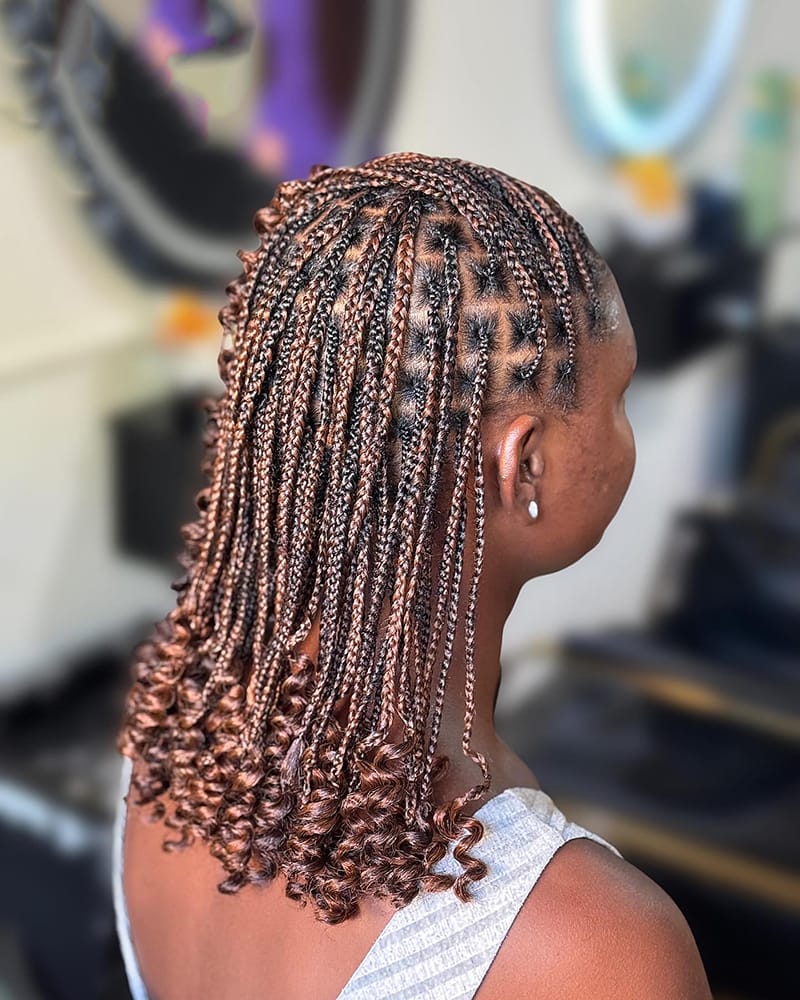
Knotless techniques can sometimes take a little longer than knotted braiding of the same size, so plan for roughly 3 to 5 hours, with pricing around $220 to $380. This combination is worth asking about if you have a sensitive scalp or want a more natural, undone finish.
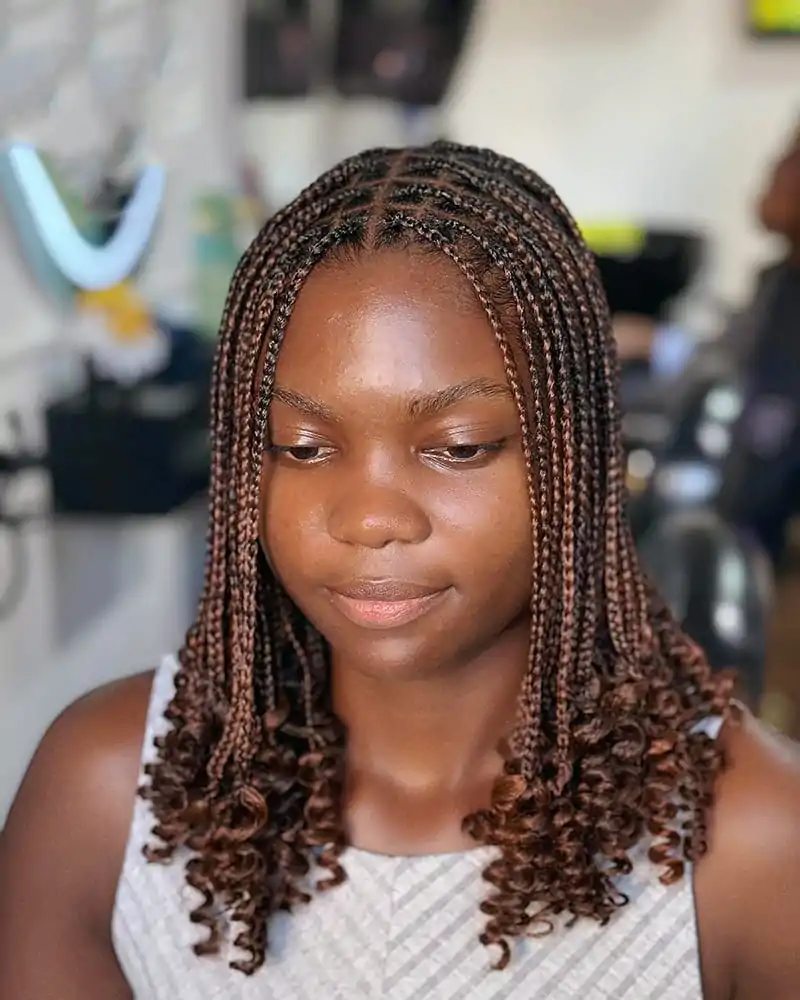
Classic Side-Parted Pixie Braid Bob
A deep, clean side part shifts more length to one side of the face, similar to the asymmetrical version but without the uneven cut. Every braid stays the same length, so the difference comes entirely from where the part sits.
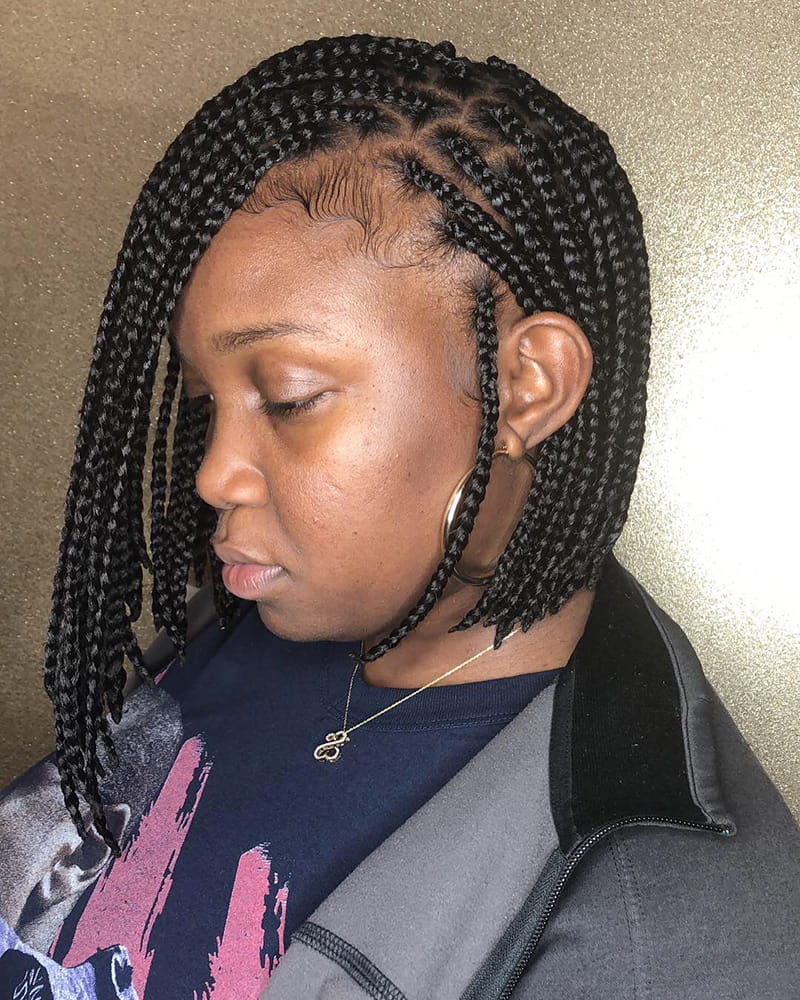
This is a fairly straightforward install, generally 2.5 to 4.5 hours, with pricing around $150 to $280. It is also one of the easier styles in this guide to maintain at home, since re-parting is simple and does not require redoing the whole head to keep it looking fresh.
Knotless Micro-Braid Bob with Curly Ringlet Ends
This style combines the gentler, gradual tension of knotless braiding with the fine detail of micro-sized braids, finished with bouncy curly ringlets. It is a lot of technique packed into one bob, which shows in both the price and the time commitment.
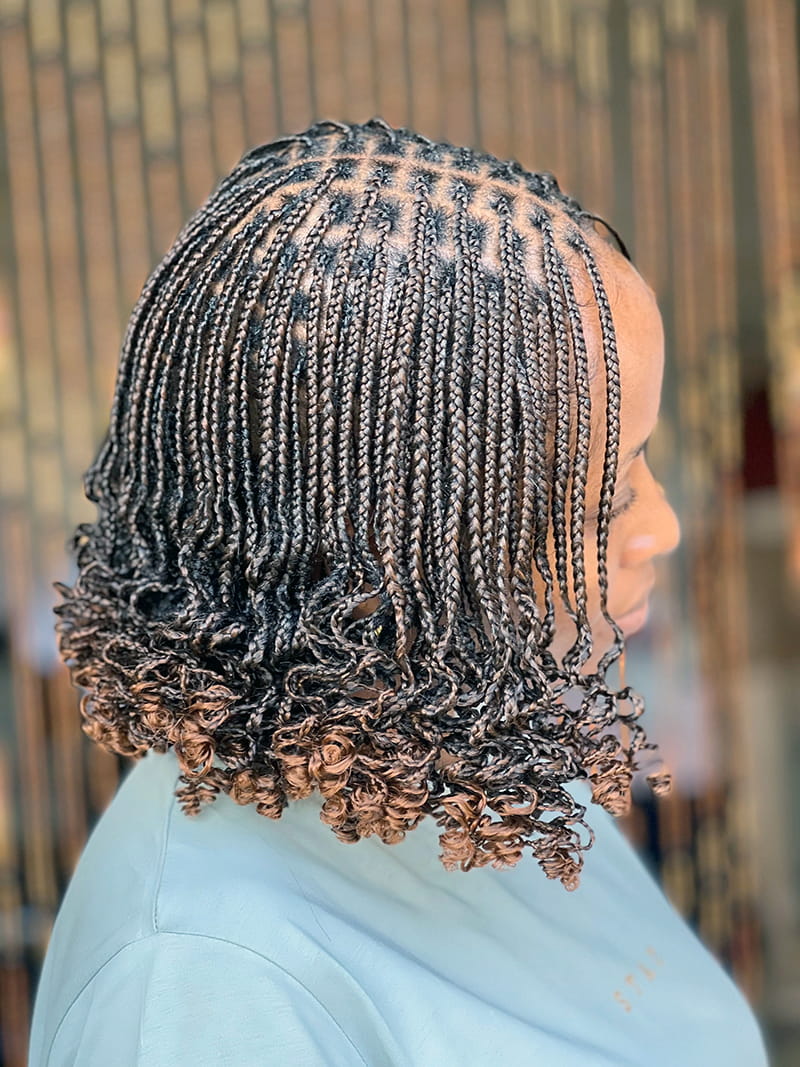
Expect one of the longer appointments in this guide, around 5 to 7 hours, with pricing near $280 to $450. The payoff is a soft, full, low-tension style that tends to look natural and less bulky than thicker knotless braids of the same length.
Fulani Braid Pixie Bob with Curly Ringlet Ends
Fulani braids draw from a traditional West African pattern: typically a center or off-center braid running front to back, cornrows framing the sides, and box braids or twists filling the space between, often finished with beads. Brought into a bob length with curly ringlet ends, this style keeps that signature structure in a shorter, more modern silhouette.
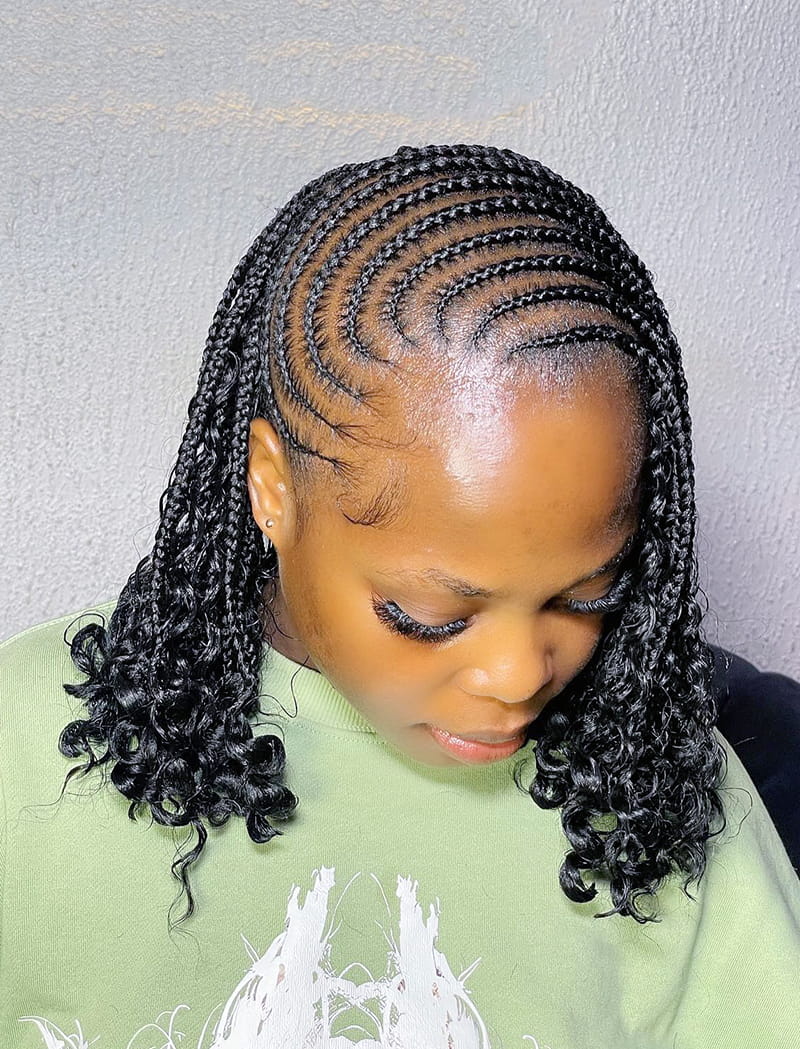
The layered pattern takes real skill to map out, so plan for around 3 to 5 hours, with pricing near $200 to $380. If this pattern speaks to you, this Fulani braids guide has more inspiration at longer lengths too.
Half-Up Half-Down Pixie Braid Bob
This is less about a specific braid type and more about how the finished bob is worn. Pulling the top section up into a small bun or clip while leaving the rest down proves that even short braids have styling options beyond just wearing them down.
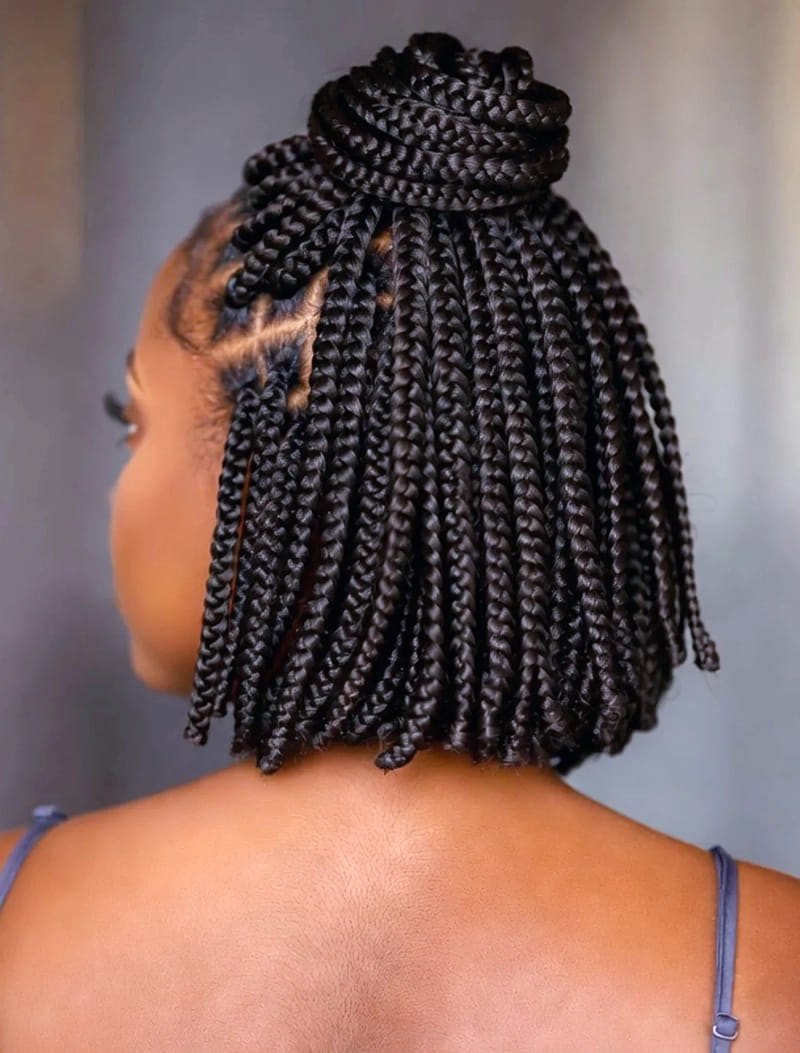
Since this is a styling choice rather than a separate technique, cost and time match whatever base style sits underneath, typically the standard 2.5 to 4.5 hours and $150 to $300 range for a classic bob. Mention this option to your stylist upfront, since it can affect how much length they leave at the crown.
Fine Micro-Braid Pixie Bob
This is the finest braid size in this entire guide, and it shows in the finished texture: soft, full, and closer to the look of very fine natural twists than a traditional chunky braid. It is also the most time-intensive version here.
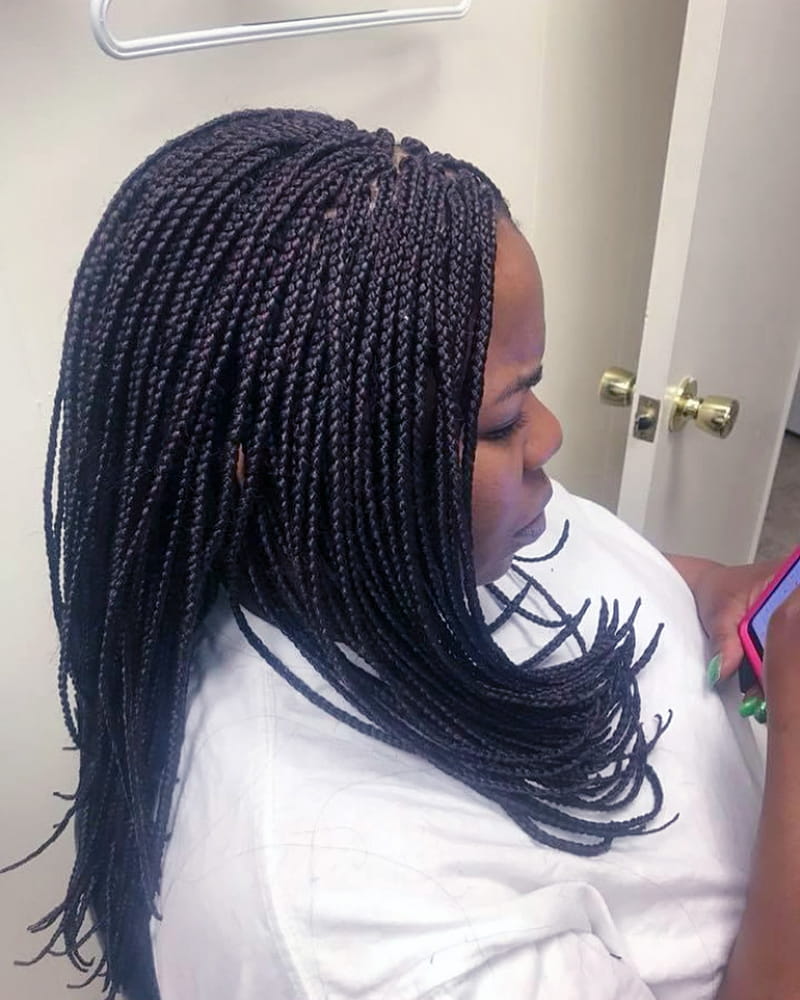
Full installation can run 5 to 8 hours or more, and pricing often lands between $300 and $500, sometimes higher depending on hair length and your stylist’s rate. If you choose this size, plan your appointment for a day with no other commitments, and ask your stylist whether splitting the session across two days is an option.
How Can You Get Pixie Braids?
Getting pixie braids starts before you sit in the stylist’s chair. First, talk with your stylist about the look you want. Choose the braid size, length, color, and parting pattern together. Bring a few reference photos, too. This helps you and your stylist picture the same result.
Next, your stylist washes and blow-dries your hair or stretches it gently. This makes sectioning easier. They then create small, even squares or rows based on your chosen pattern. Each section may be braided, cornrowed, or twisted. Your stylist may also add extension hair for extra length and fullness.
After finishing the braids, the stylist shapes the ends. They may create an even bob or add layers for more movement. Depending on the hair used, they may seal or dip the ends to help prevent unraveling.
Finally, your stylist adds the finishing touches. This may include curled ends, beads, cuffs, or a specific part. Professional installation usually gives cleaner parts and more even tension. These results also take practice to achieve. A DIY attempt may take much longer and look less uniform at first.
Step-by-Step Instructions (Pixie Braids Tutorial)
- Wash and deep condition your hair, then blow-dry or stretch it so it lies flat and detangled.
- Section your hair based on your chosen pattern, whether that means cornrow rows or small square sections for individual braids.
- Apply a lightweight edge control or braid gel at the root of each section to smooth flyaways before braiding.
- Braid, twist, or cornrow each section, feeding in extension hair gradually if you want length or fullness beyond your natural hair.
- Continue section by section across the whole head, checking that tension feels even and comfortable throughout.
- Trim the ends to your desired bob length, either straight across or in soft layers.
- Seal the ends by dipping synthetic hair in hot water or trimming cleanly, depending on the extension type used.
- Style the finished braids: curl the ends, add beads or cuffs, and set your part.
Pixie Braids Without Extensions
Pixie braids without extensions work best when your natural hair is long enough to grip and braid securely. A few inches of length can make the process easier. Your hair density and curl pattern also affect the final result.
This style looks a little different from braids with extensions. The braids are usually shorter and may look thinner. The finished style can also have less fullness.
One big benefit is the lower cost. You do not need to buy synthetic or human hair. Your natural hair also carries less extra weight. This may make the style feel more comfortable.
However, there are some trade-offs. You may have less length, fullness, and styling options. The braids may also lose their shape sooner without extensions.
How long they last depends on your hair type and how well you care for them. In many cases, natural-hair pixie braids need a refresh sooner than styles with extensions. For some people, that may be around two to three weeks.
Pros and Cons of Pixie Braids
Pros
- Protects your natural hair from daily manipulation and heat styling while it rests or grows out underneath.
- Delivers a bold, short haircut look without cutting any of your actual hair.
- Comes in dozens of sizes, colors, and patterns, so it is easy to personalize.
- Generally low daily maintenance once installed, since there is little need for regular restyling.
- Works well in warm weather and for workouts, since shorter braids trap less heat than longer styles.
Cons
- Installation for smaller or more detailed patterns can take several hours in one sitting.
- Cost adds up quickly for micro or intricate styles, since labor time drives much of the price.
- Any braided style can become too tight if installed poorly, raising the risk of scalp tension or discomfort.
- Because the style is short, new growth at the root becomes visible sooner than with longer braids.
- Removal still takes real time and care, and rushing it can stress your natural hair.
- Very fine or micro versions put more individual sections on the scalp, which some people find less comfortable over time.
How to Maintain Pixie Braids
Good maintenance starts on the first night after you get your pixie braids. Wrap your hair with a satin or silk scarf before bed. You can also sleep on a satin pillowcase. Both options help reduce friction while you sleep. A loose, low pineapple or bonnet can also help keep your braids neat overnight.
Your scalp still needs care, even when your hair is covered with braids. Apply a light scalp oil or serum every few days if your scalp feels dry. Avoid scratching or picking at your scalp with your fingers or sharp tools. This can cause small cuts and irritation. To wash your scalp, mix a gentle shampoo with water. Use an applicator bottle to apply it between the braids. Rinse well and let your roots dry completely. Trapped moisture can lead to buildup or an unpleasant smell. Good hair care is just as important when you wear braids.
To control frizz, lightly mist your braids with water and leave-in conditioner. Then use a small amount of gel or edge control. This can smooth flyaways without making your hair heavy. Be gentle around your edges. Too much tension can put stress on your hairline.
You can exercise and swim while wearing pixie braids. However, rinse out chlorine or salt water as soon as possible. Then dry your roots fully. This helps prevent buildup and a musty smell. Most pixie braids should be removed within six to eight weeks. Remove them sooner if you notice too much tension or new growth pulling at the roots. Watch for tenderness, bumps, or ongoing itching around your hairline. These can be signs that the braids are too tight. The American Academy of Dermatology also advises watching for signs of tension from tight hairstyles.
Products Necessary to Do and Maintain Pixie Braids
Before installation
- Clarifying shampoo: removes buildup so hair starts clean and braids grip evenly.
- Deep conditioner: restores moisture before hair spends weeks under tension.
- Pre-stretched braiding hair: synthetic options like Kanekalon-based pre-stretched packs; a common category example is X-pression. Save prep time since the hair arrives already stretched and ready to use.
During installation
- Edge control or braid gel: smooths the root of each section for a cleaner part.
- Rat-tail comb: creates precise, even parts for consistent sections.
- Sealing tool or hot water: sets synthetic braid ends so they stop fraying.
Maintenance
- Lightweight scalp oil: keeps the scalp from drying out under weeks of braiding.
- Diluted or clarifying shampoo with an applicator bottle: allows targeted scalp cleansing without disturbing the braids.
- Leave-in conditioner spray: refreshes moisture and reduces frizz between wash days.
Nighttime protection
- Satin or silk scarf or bonnet: reduces the friction that causes frizz and flyaways overnight.
- Satin pillowcase: a lower-effort backup if you are inconsistent about wrapping your hair.
Removal
- Small, sharp shears: for safely cutting through synthetic sections without nicking natural hair.
- Detangling spray or oil: softens buildup and eases the comb-out after braids come down.
- Wide-tooth comb: gently separates natural hair once braids are removed, minimizing breakage.
Frequently Asked Questions About Pixie Braids
Most pixie braids last around 4 to 6 weeks with good care, though some people stretch this closer to 8 weeks. Because the style is short, new growth at the root tends to show sooner than it would with longer braids, so many people refresh or remove theirs on the earlier end of that range.
Pricing varies widely based on braid size, technique, and location, but most versions in this guide fall somewhere between $120 and $450. Chunky, larger braids sit at the lower end, while micro, knotless, or heavily patterned styles land at the higher end because of the extra time involved.
Pixie braids can work well for natural hair, since they protect strands from daily heat and manipulation while your hair rests or grows underneath. Curl pattern matters less than length and density, since most of the visible braid is extension hair rather than your natural texture.
Any braided style can contribute to hair or scalp problems if it is installed too tightly, worn too long, or removed carelessly. Choosing a reasonable braid size, keeping tension comfortable, and following general dermatologist guidance on wear time can lower that risk considerably.
Installation time depends heavily on braid size. Chunky or cornrowed versions can take as little as 1.5 to 3 hours, medium sizes often run 2.5 to 5 hours, and micro or heavily detailed patterns can take 5 to 8 hours or more.
Yes, if your natural hair has enough length, generally a few inches, to braid on its own. The result will likely be thinner and less full than an extension-based style, and it may need a refresh sooner.
There is no single face shape this style is limited to. A deep side part or soft, curved ends can complement rounder or squarer faces, while a straight-back, symmetrical version can add structure to softer features. Much of it comes down to personal preference and length placement.
Wrap your hair in a satin or silk scarf or bonnet, or sleep on a satin pillowcase, to reduce friction and frizz. A loose, low pineapple can also help keep the shape neat overnight.
Yes, though it works best to dilute shampoo and apply it directly to the scalp with an applicator bottle rather than scrubbing the whole head. Rinse thoroughly and dry the roots completely afterward to avoid lingering moisture and odor.
Start by carefully cutting through the extension hair with small, sharp shears, staying well clear of your natural hair. Gently unravel or comb out the remaining natural braid with a detangling spray or oil, working in small sections from the ends up to reduce breakage, then follow with a deep conditioning treatment. How long do pixie braids last?
How much do pixie braids cost?
Are pixie braids good for natural hair?
Can pixie braids damage your hair?
How long does it take to install pixie braids?
Can you do pixie braids without extensions?
What face shape looks best with pixie braids?
How do you sleep with pixie braids?
Can you wash pixie braids?
How do you remove pixie braids safely?
Conclusion
Pixie braids offer something genuinely useful. The bold and cropped look of a pixie haircut without a single cut to your real hair. Whether you prefer a clean cornrow bob, a beaded Fulani-inspired style, or chunky box braids with cuffs, there is a pixie braid style for your hair, budget, and schedule.
The most important takeaways are simple. Choose a braid size and pattern based on your budget and the time you have. Keep the braids comfortable, not tight. Take care of your scalp while wearing the style. Plan to remove or refresh the braids within six to eight weeks. Also, watch your hairline for any signs of tension.
If you are trying pixie braids for the first time, a classic medium bob is a great place to start. It is simple, affordable, and easier to manage before trying detailed styles like geometric parts or micro cornrows. However you choose to wear it, pixie braids are a flexible way to protect your hair while trying on a completely new look. For even more ideas, browse the full collection of hairstyles for Black women on Curly Craze.
- Pixie Braids Hairstyles: 32 Styles, Costs, and Care Tips - September 3, 2026
- 15 Side Braid Hairstyles for Every Face Shape and Hair Type - August 20, 2026
- 20+ Exceptional Curly Bob Hairstyles for Blalck Women over 50 - June 14, 2026